Born at 24 Weeks: How Lakeside Hospital’s Neonatal Intensive Care Team Helped a Micro Preemie Grow and Thrive
- Category: Patient Story, NICU, Obstetrics & Maternity Care
- Posted On:

When Kevielle Sanders looks at her son Kamren today, she sees a happy little boy who loves swimming, playing with his brothers, hugging family members, and proudly counting to 10.
What she doesn't immediately see is the tiny baby who once weighed just 1 pound, 7 ounces.
Born nearly four months early, Kamren spent 142 days receiving specialized care at Lakeside Hospital in Metairie, La., and Manning Family Children's in New Orleans, both LCMC Health hospitals.
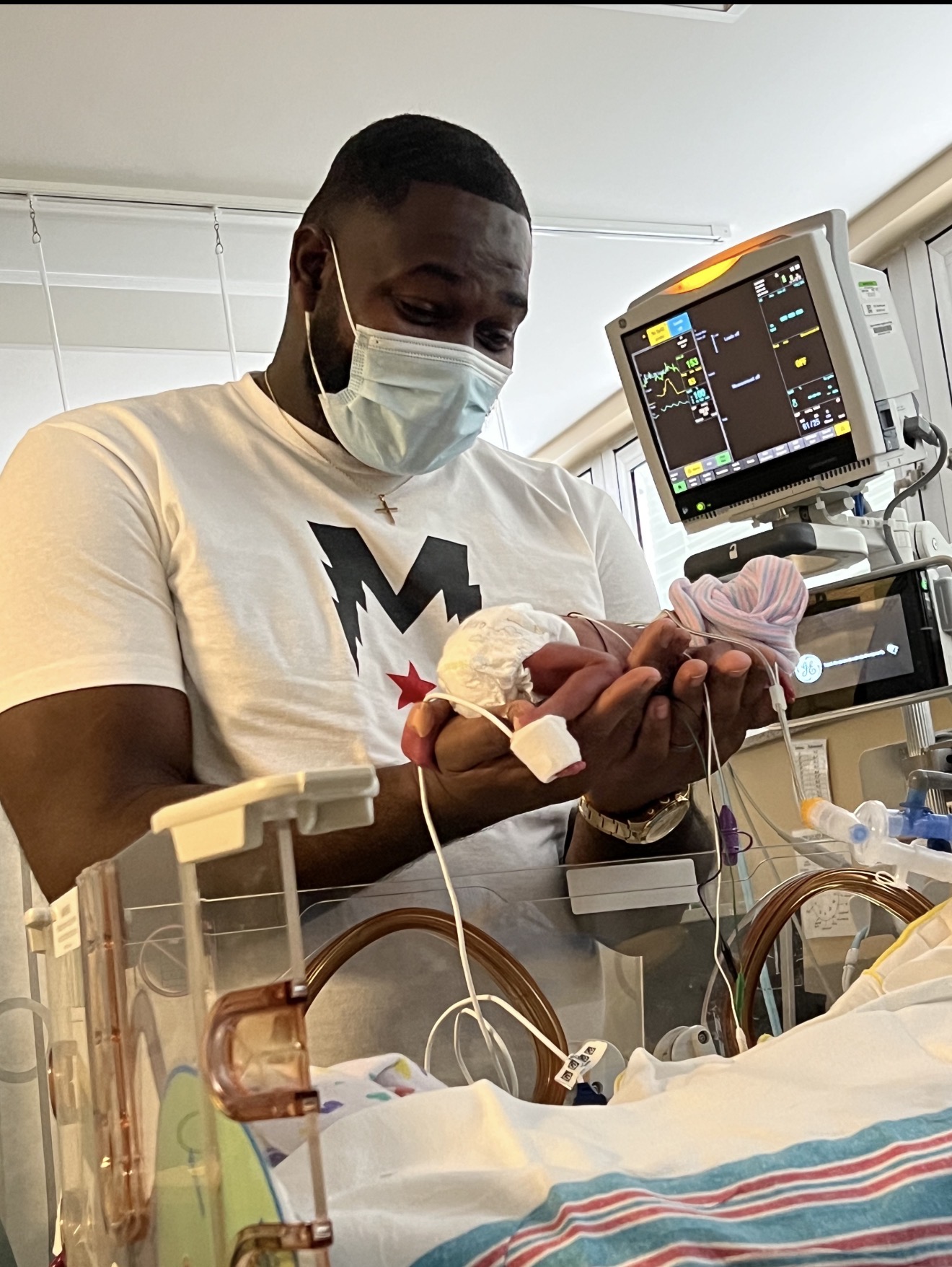
His journey began at Lakeside Hospital, where a maternal-fetal medicine team cared for Kevielle through a high-risk pregnancy and the hospital’s Level III Neonatal Intensive Care Unit (NICU) cared for Kamren after his extremely premature birth. When he later needed specialized pediatric cardiac treatment, his care continued in the NICU at Manning Family Children’s.
Along the way, the “micro preemie” faced serious challenges involving his lungs, heart, and overall development. Through advanced neonatal care, specialized heart treatment, and the unwavering support of doctors, nurses, and therapists, Kamren beat the odds.
Today, he is preparing for preschool and will celebrate his fourth birthday in September. "I look at him now and sometimes can't believe how far he has come," Kevielle said.
High-Risk Pregnancy Leads to Specialized Maternal-Fetal Care
Kevielle, now 34, and her husband, Kaytrell, now 42, had been actively trying to grow their family after marrying in 2019.
When she became pregnant, she was thrilled. Early in the pregnancy, however, she experienced severe pain and was taken by ambulance to the hospital. Soon afterward, Kevielle was referred to Cecilia Gambala, MD, a maternal-fetal medicine specialist at Lakeside Hospital and an associate professor at Tulane University School of Medicine. Dr. Gambala provides specialized care for women experiencing high-risk pregnancies.
At about 18 weeks, Kevielle noticed fluid leaking and felt as though the baby had dropped lower than expected. She went to Lakeside Hospital, where doctors discovered that her cervix, the lower portion of the uterus that remains closed during pregnancy, had begun opening far too early. Doctors attempted a cerclage, a procedure that places stitches around the cervix to help keep it closed and prevent premature birth.
The situation was complicated because the amniotic sac, the fluid-filled membrane that protects a developing baby, had already begun protruding through the opening. Multiple attempts were required before the procedure was successful.
"Dr. Gambala kept reassuring me that everything would be okay," Kevielle said. "She stayed positive through the entire process."
Lakeside Care Team Works to Safely Extend a High-Risk Pregnancy
Just days later, Kevielle's water broke. The condition, known as pre-term premature rupture of membranes, occurs when the amniotic sac ruptures before labor begins and before the baby reaches full term. Kevielle was admitted to Lakeside Hospital and remained there for nearly four weeks, under close monitoring as the care team worked to safely prolong her pregnancy and give Kamren more time to develop.
One silver lining during this challenging time was the support Kevielle received from Lakeside Hospital’s NICU team, which began preparing the family for the possibility of an extremely premature delivery even before Kamren was born. “They regularly came in to explain what could happen if Kamren arrived early and what milestones they hoped to reach before he was born,” she said. “They kept such a close eye on both of us. In fact, I remember nurses coming in and monitoring Kamren’s heart rate around the clock.”
"They kept telling me that every day mattered," she said. "The longer he stayed inside, the more time his lungs had to develop."
At 24 weeks and three days, labor could no longer be delayed.
Born at 24 Weeks, Kamren Begins His NICU Journey
Kamren entered the world on September 13, 2022. He weighed just one pound, seven ounces.
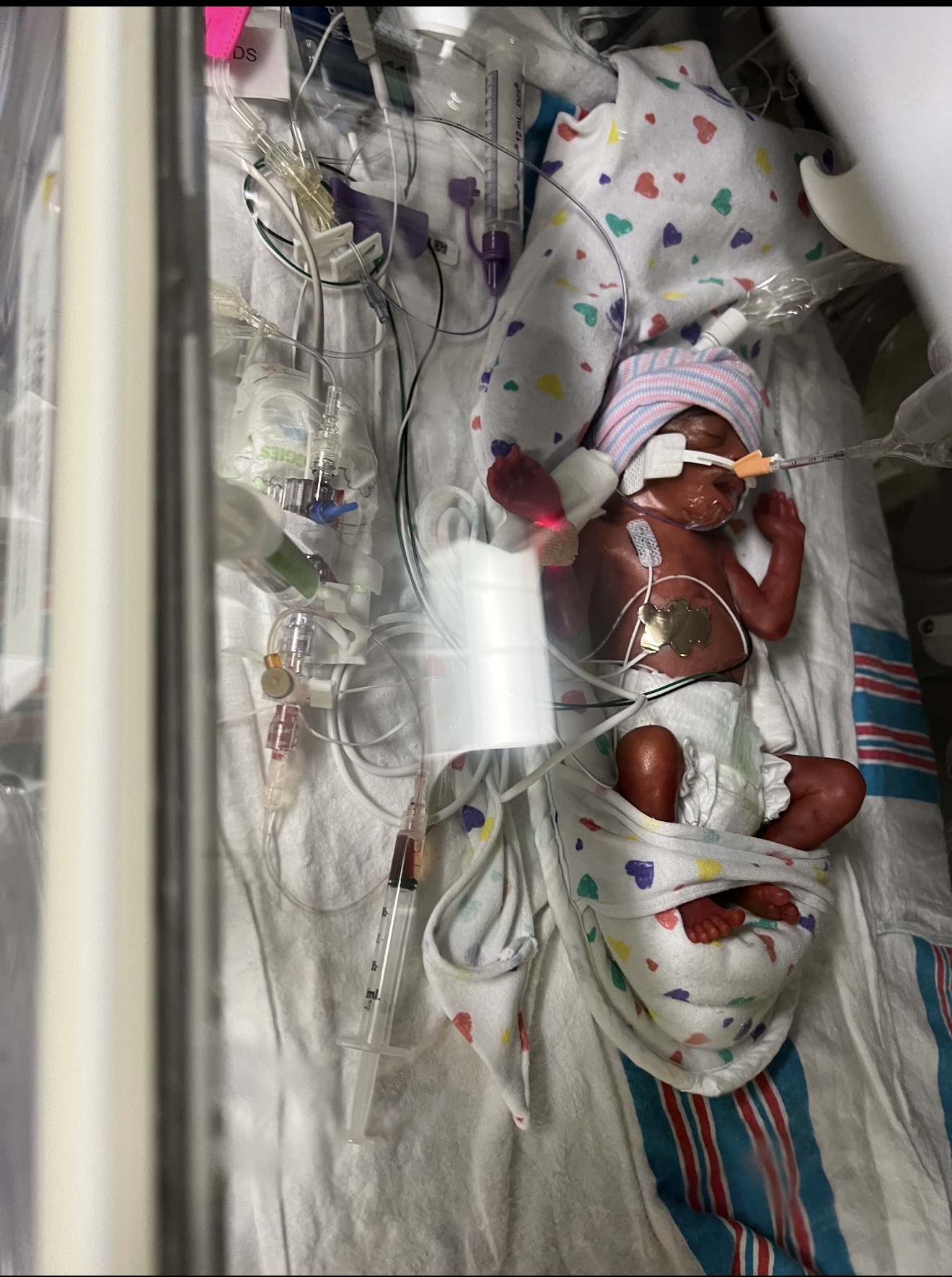
He was immediately cared for in Lakeside Hospital’s Level III NICU, where neonatologists, neonatal nurse practitioners, nurses, respiratory therapists, and other specialists provide around-the-clock care for premature and critically ill newborns.
Babies born before 28 weeks are often called micro preemies because of their extreme prematurity and very small size. "He was the size of my hand," Kevielle said. "My husband's wedding ring fit around his leg!"
One encouraging sign came immediately after birth. Kamren cried.
For babies born this early, crying can be difficult because their lungs are often severely underdeveloped. "The doctors couldn't believe it," Kevielle said. "They said, 'Clearly he has lungs.'"
Still, Kamren needed extensive respiratory support. His immature lungs required a ventilator to help move oxygen into his body.
Because he was so fragile, Kevielle wasn't able to hold him right away. Three weeks later, she finally got that opportunity. "It was one of the best moments of my life," she said.
Level III NICU Care Helps Kamren Grow Stronger
Life in the NICU became a marathon rather than a sprint. “We celebrated even the smallest of milestones. When he reached two pounds. When they moved him to an open crib. The first time he was able to increase his nutrition intake. The day they could turn down the ventilator to allow his own lungs to do more of the work,” Kevielle said. “We even celebrated every ounce he gained.”
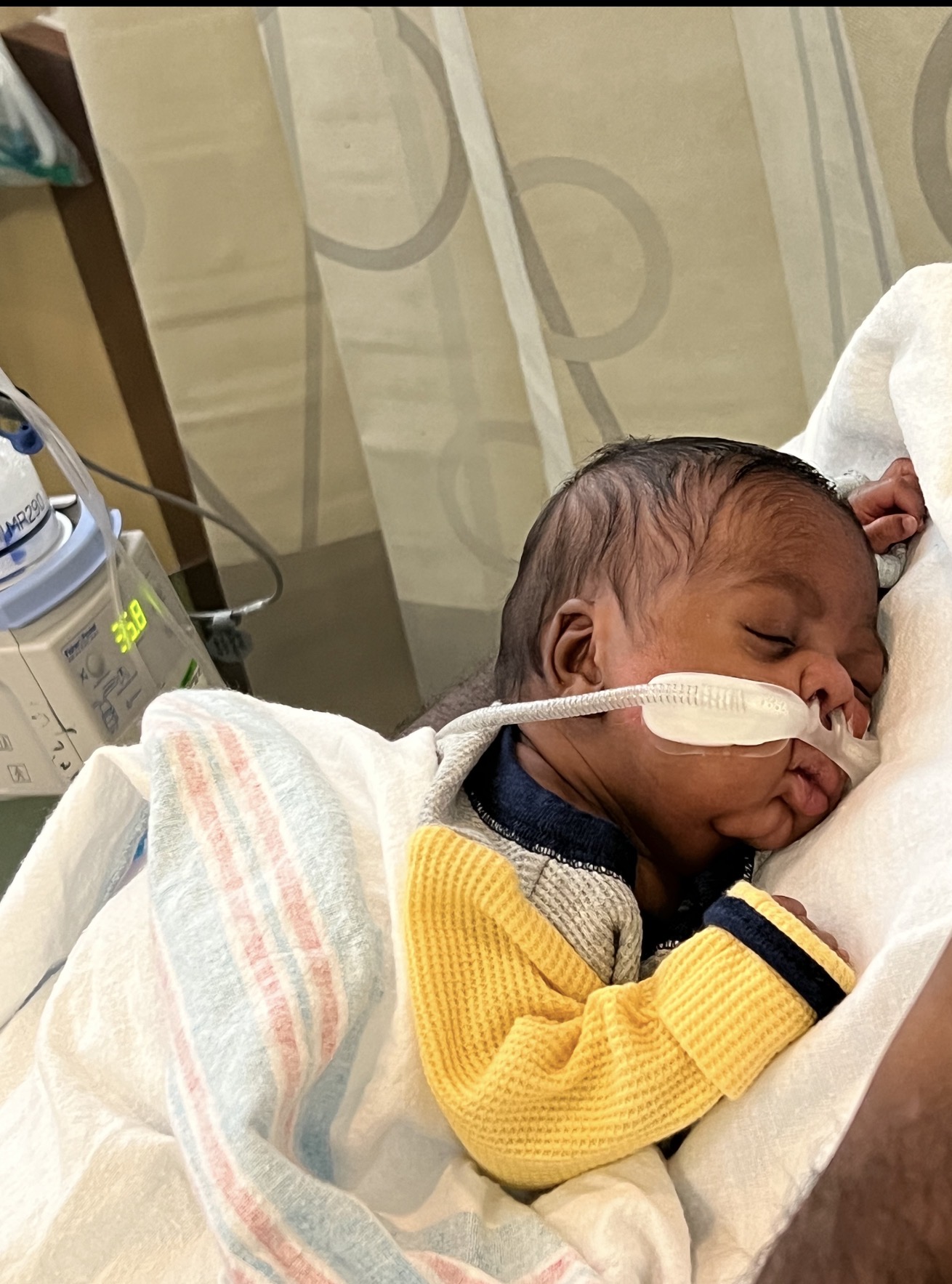
Kamren required several forms of respiratory support as his lungs matured. Among them was bubble CPAP (continuous positive airway pressure). This system delivers gentle air pressure through small nasal prongs to help keep tiny airways open. As his lungs improved, doctors carefully reduced the amount of respiratory assistance he needed. Throughout his NICU stay, the neonatal and respiratory therapy teams closely monitored his progress and adjusted his support as his lungs continued to develop. In fact, the respiratory therapy team became a constant source of support for the family.
"The respiratory therapists, nurses, and doctors treated us like family," Kevielle said. "There were days I walked in crying, and they literally wiped away my tears."
Collaborative Care Connects Kamren to Specialized Heart Treatment
As Kamren continued to grow, doctors identified another challenge. He had a patent ductus arteriosus, commonly called a PDA. Before birth, all babies have a blood vessel called the ductus arteriosus that allows blood to bypass the lungs while they are developing. Normally, this vessel closes shortly after birth. In premature babies, however, it sometimes remains open. When this happens, the heart and lungs can be forced to work harder than normal.
Doctors first attempted to close Kamren's PDA with medication, which is often the preferred initial treatment. Unfortunately, the vessel remained open. When Kamren needed pediatric cardiac expertise beyond the care required for his prematurity, he was transferred within the LCMC Health system from Lakeside Hospital to Manning Family Children's for specialized cardiac care. There, pediatric specialists performed successful surgery to close the PDA.
The surgery took place on December 29, 2022. The family welcomed 2023 with great news. Kamren achieved an important milestone: feeding from a bottle.
Before a baby can leave the NICU, several critical milestones must be met. The baby must be able to breathe without significant support, maintain body temperature, gain weight consistently, and safely take feedings. For Kamren, learning to drink from a bottle while coordinating breathing and swallowing represented a major achievement.
Kamren Heads Home After 142 Days in the NICU
After 142 days of specialized neonatal and pediatric care across Lakeside Hospital and Manning Family Children's, Kamren was finally discharged on February 4, 2023. The day the family brought him home was unforgettable.
Like many babies born extremely premature, Kamren continued receiving specialized follow-up care after discharge. He sees pulmonologists, doctors who specialize in lung conditions, and cardiologists, doctors who specialize in heart conditions.
He also participated in physical therapy and Louisiana's EarlySteps program to support developmental milestones such as rolling, crawling, walking and speech development. His progress steadily improved. He crawled around 10 months of age and began walking around 14 to 15 months.
Today, Kamren Is Thriving
Since leaving the NICU, Kamren has returned to the hospital several times for illnesses, including influenza and a febrile seizure, a seizure triggered by a fever. Despite those setbacks, he continues to grow and thrive.

Now 4 years old, Kamren loves Spider-Man, swimming, trips to the beach, and playing with his older brothers. Most importantly, he is known for something even more special.
"He'll randomly come up and tell us he loves us," Kevielle said. “That’s so special.”
A Message for Other NICU Parents
Looking back, Kevielle remembers how overwhelming those early days felt. There were moments of fear, uncertainty, and exhaustion. But she also remembers the physicians, nurses, respiratory therapists, and other specialists at Lakeside Hospital and Manning Family Children’s who guided her family from a high-risk pregnancy and extremely premature birth through months of specialized care.
"Don't give up on your baby," she said. "There are days when things look really bad. Let your baby be your motivation and lean on the doctors and nurses. They explained everything, answered every question and helped me through some of the hardest moments of my life."
Today, she remains grateful for every member of the team who helped save her son's life.
"When Kamren was at his most critical, they kept reminding me that they believed he would survive," she said. "The nurses felt like family to me because they treated us like family. They love all of the babies and I could feel it every single day."
Lakeside Hospital Expands Women and Newborn Care
Kamren’s story reflects Lakeside Hospital’s longstanding focus on caring for women and newborns, including families facing high-risk pregnancies and premature births. That commitment is continuing to grow. LCMC Health is investing $14 million to expand and modernize Women and Newborn Care at Lakeside Hospital, bringing services currently offered at Lakeside Hospital and East Jefferson General Hospital together on the Lakeside campus.
For more information about Women and Newborn Care, high-risk pregnancy services and the Level III NICU at Lakeside Hospital, please visit Maternity & Labor Services at Metairie Birth Center - Lakeside