Mammogram leads to stage 3 breast cancer diagnosis and coordinated care at Touro, West Jefferson Medical Center
- Category: Patient Story
- Posted On:

Stacie Arbourgh is a school nurse and mother of three. She understands the importance of keeping up with routine healthcare screenings. When she turned 40, she went for her first mammogram, a breast cancer screening.
The results of the mammogram came back concerning. There was a suspicious finding, Stacie said, adding that the specific note said, “left side focal asymmetry – recommending further testing and ultrasound.”
Stacie was immediately contacted about coming back for additional imaging. But it was the spring of 2023 and she had a lot of plans. She waited a few months to follow up.
“I didn’t feel anything,” Stacie said. “I have no family history of breast cancer. And, at the time, I thought I was fine and the follow up could wait.”
But the suspicious spot on her breast described in the report began to weigh on her mind. She contacted her OB/GYN Jeanne Hutchinson, MD, who practices at West Jefferson Medical Center in Marrero, La.
Dr. Hutchinson encouraged Stacie not to ignore the finding and recommended that she return for additional imaging as soon as possible. That advice and the decision to heed it likely changed the course of Stacie’s life.
Stacie, a resident of Belle Chasse, La., is now 43 and is officially in remission from stage 3 triple-positive breast cancer.
In honor of Breast Cancer Awareness Month, celebrated every October, LCMC Health recognizes Stacie’s journey. It’s a journey that underscores the importance of routine screenings including annual mammograms for women beginning at age 40. For those who are at a higher risk of breast cancer, be sure to consult your physician about getting a mammogram.
Follow-up mammogram leads to a breast cancer diagnosis
Stacie went in for the additional testing, including a second (follow-up) mammogram in July 2023. A few days later, a notification appeared in her patient portal telling her that the results were available.
“I opened my portal and read the mammography report. At the very end of the report, there was one line. All I saw was one line. It said, ‘highly suggestive of malignancy,” Stacie recalls. “I closed the portal and drove home in shock.”
Stacie said the possibility that she had cancer took her breath away. Stacie was scared, overwhelmed, and worried about everything she did not yet know. She and her husband, Corey, read the report together when she got home.
Dr. Hutchinson called that night. “She knew I read the report,” Stacie said, adding the doctor said, ‘We are not going to take this lightly. We need to discuss next steps.’”
Dr. Hutchinson moved quickly to get Stacie to a breast surgeon and arrange a biopsy. “She was very supportive and acted quickly in expediting the appointments,” Stacie said. “She really made sure I got the care that I needed.”
A biopsy removes a small sample of suspicious tissue so it can be examined for cancer cells. Stacie had hers on August 11. The results confirmed she had stage 3 triple-positive breast cancer.
Understanding stage 3 triple-positive breast cancer
“Triple positive” means the cancer cells tested positive for three receptors that can promote their growth: HER2, estrogen receptors, and progesterone receptors. Knowing a breast cancer’s receptor status is important because it helps physicians select treatments designed for the biology of that particular cancer.
HER2-positive cancers, for example, can be treated with drugs that specifically target the HER2 protein. Hormone receptor-positive cancers can also be treated with therapies intended to block or reduce the hormonal signals that can fuel the cancer. Targeted therapies differ from traditional chemotherapy because they are directed at particular features of cancer cells.
West Jefferson medical oncologist Agustin Garcia, MD, developed Stacie’s drug treatment plan based on the results of her biopsy. Her treatment plan was tailored to the specific characteristics of her triple-positive breast cancer.
Stacie remembers Dr. Garcia as thorough and accessible, taking the time to explain what was happening in terms she and her family could understand. “Dr. Garcia would respond on the portal himself,” she said. “He was very responsive to any and all questions.”
Beginning chemotherapy at West Jefferson Medical Center
Less than a month after her biopsy, Stacie had a port placed on September 6, 2023. A port is a small device implanted beneath the skin that provides reliable access to a large vein. Having a port makes it easier to get repeated IV treatments without getting a new IV for every infusion.
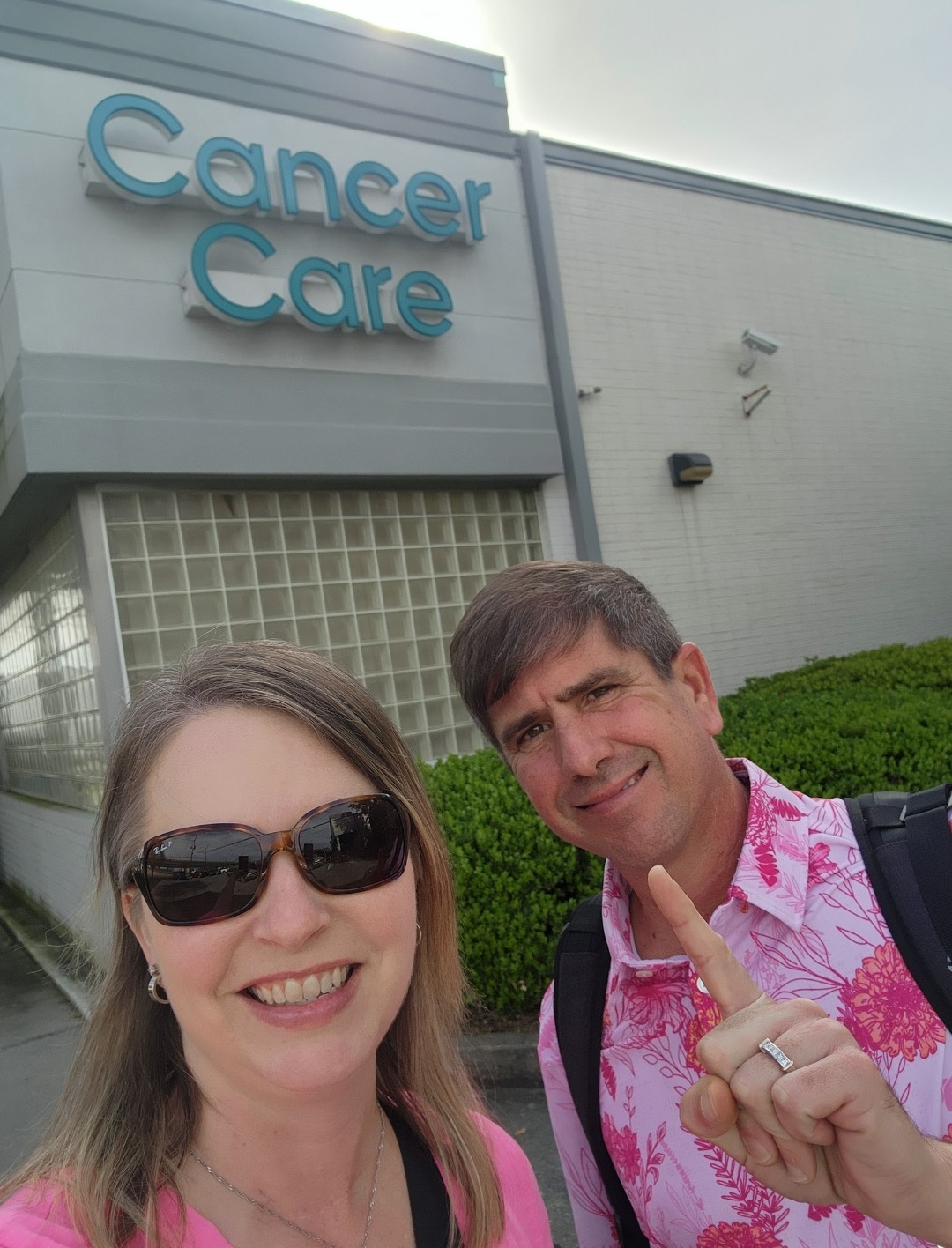
Her first infusion followed on September 14.
Stacie initially underwent six rounds of chemotherapy, with each treatment lasting four to six hours. Chemotherapy uses medications that kill cancer cells or interfere with their ability to grow and divide.
She used a cooling cap during chemotherapy. The cap cools the scalp to reduce blood flow to hair follicles and can reduce chemotherapy-related hair loss for some patients. Stacie estimates that she kept about half of her hair, although it thinned considerably.
Throughout her breast cancer journey, Stacie also received guidance and support from breast surgical oncologist Alfred J. Colfry, III, MD, and his physician assistant and breast surgery specialist, Karley Boagni, PA-C, both with Touro. She credits them with helping her navigate the early stages of treatment and recommending the cooling cap.
“They are wonderful, very calming, and compassionate,” Stacie said. “They were very comforting getting me through the stages.”
She found something else valuable in the people caring for her. Some members of the surgical teams had experienced breast cancer themselves or had been close to someone who had.
“The biggest thing for me is that they shared their experiences,” Stacie said. “They made it clear to me that there were treatment options for me and that they would help me get through them.”
Double mastectomy and DIEP flap breast reconstruction at Touro
After completing the first six rounds of chemotherapy, Stacie underwent surgery in January 2024 at Touro. She chose to have a double mastectomy, the surgical removal of both breasts. She said her decision to have the double mastectomy was based on two things.
“Of course, I was concerned about the possibility of the cancer coming back. But I also wanted symmetry after reconstruction.”
Her surgical care brought together breast cancer surgery and reconstructive expertise. Dr. Colfry performed Stacie's double mastectomy, while Mark Stalder, MD, a plastic surgeon at Touro, performed DIEP flap reconstruction as part of her surgical care.
DIEP, short for deep inferior epigastric perforator, reconstruction uses a patient’s own skin and fatty tissue from the lower abdomen to reconstruct the breast. Unlike some older forms of tissue-flap reconstruction, the procedure is designed to preserve the abdominal muscles.
Targeted therapy continues at West Jefferson Medical Center
Surgery did not mark the end of treatment.
Stacie returned to therapy in February 2024 for 20 additional rounds of targeted treatment. These infusions were shorter, generally about two hours each, compared with the four to six hours required for her first six treatments.
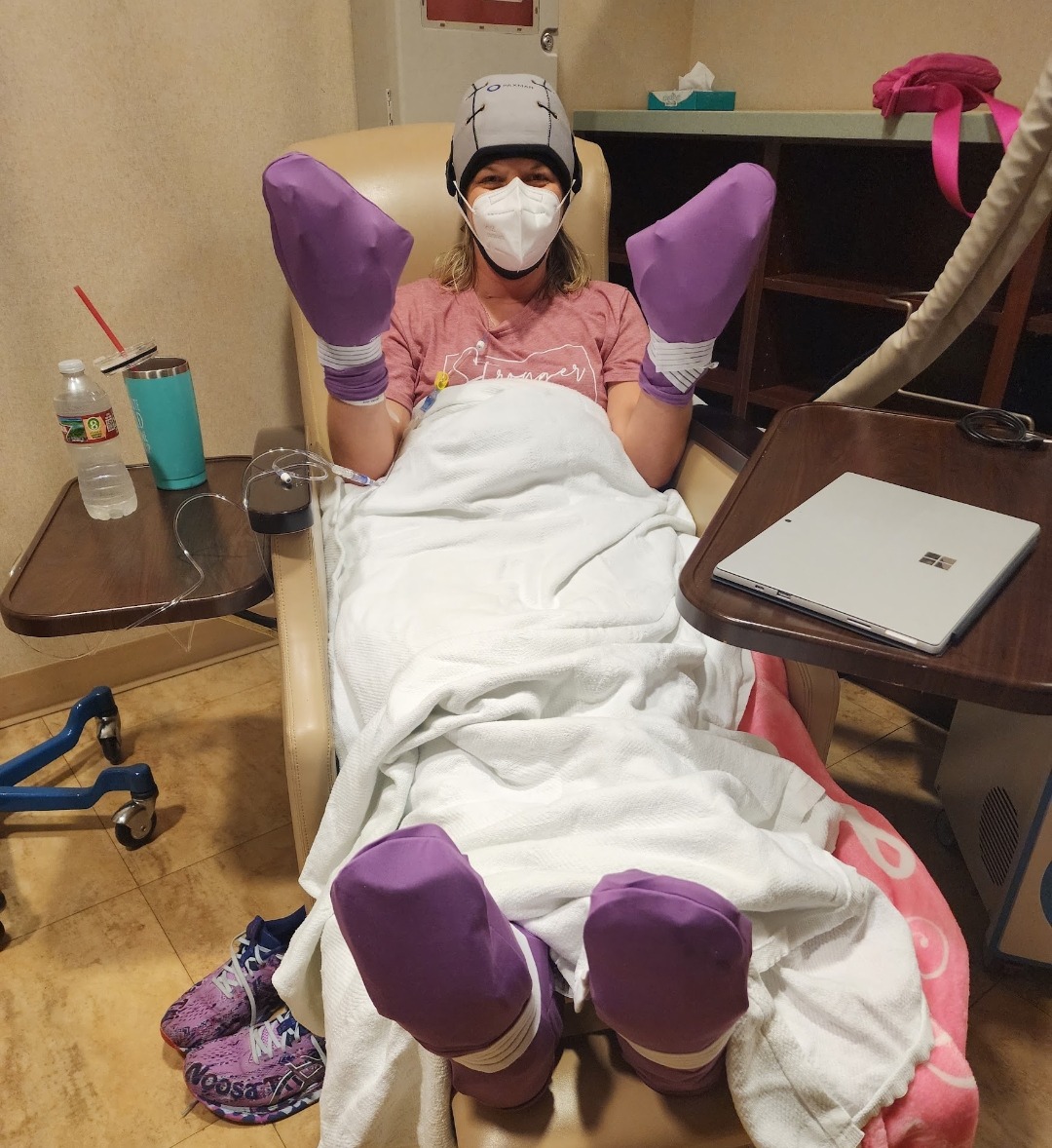
Targeted breast cancer therapies attack particular proteins or other characteristics that help cancer cells survive and grow. For HER2-positive breast cancer, certain targeted medications attach to or interfere with the HER2 protein and help stop cancer cells from growing.
Her final infusion came in March 2025. Through all 26 treatments, Corey was there.
“We called the appointments our ‘day dates,’” Stacie said laughing. “Not the most fun of dates, but it was what it was.”
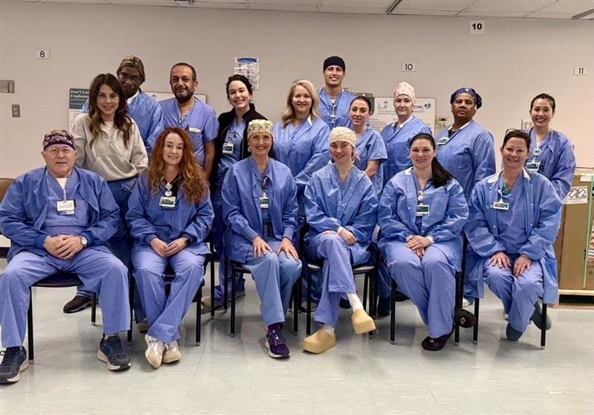
Stacie and Corey became familiar faces to the nurses at the Cancer Center at West Jefferson Medical Center, where oncology nurses and other specialists care for patients receiving chemotherapy and other cancer treatments.
“Everyone at West Jefferson Medical Center, including the chemo clinic nurses, were wonderful,” Stacie said. “They became like family to me during that time.”
The hours together created relationships that went beyond administering medication.
“I spent a lot of time with them, and I got to know them and they got to know me,” she said. “They were caring and great communicators. We learned about each other’s families through talking. They make light of a tough situation. They tried to make me feel as comfortable as they could.”
Ongoing breast cancer care focuses on reducing recurrence risk
Because Stacie’s cancer was sensitive to estrogen and progesterone, controlling the effects of those hormones became another part of her treatment. Chemotherapy initially put her into medically induced menopause, meaning treatment temporarily or permanently stopped normal ovarian function.
About 18 months after her initial treatment, Stacie underwent surgery to remove her ovaries and fallopian tubes. Removing the ovaries dramatically reduces the body’s production of estrogen before natural menopause. For someone with hormone receptor-positive breast cancer, reducing estrogen can be part of a strategy to lower the risk that remaining hormone-sensitive cancer cells will grow.
She continues to have regular follow-up appointments and takes oral cancer medication as part of her ongoing care.
Life after breast cancer: “I have an amazing village”
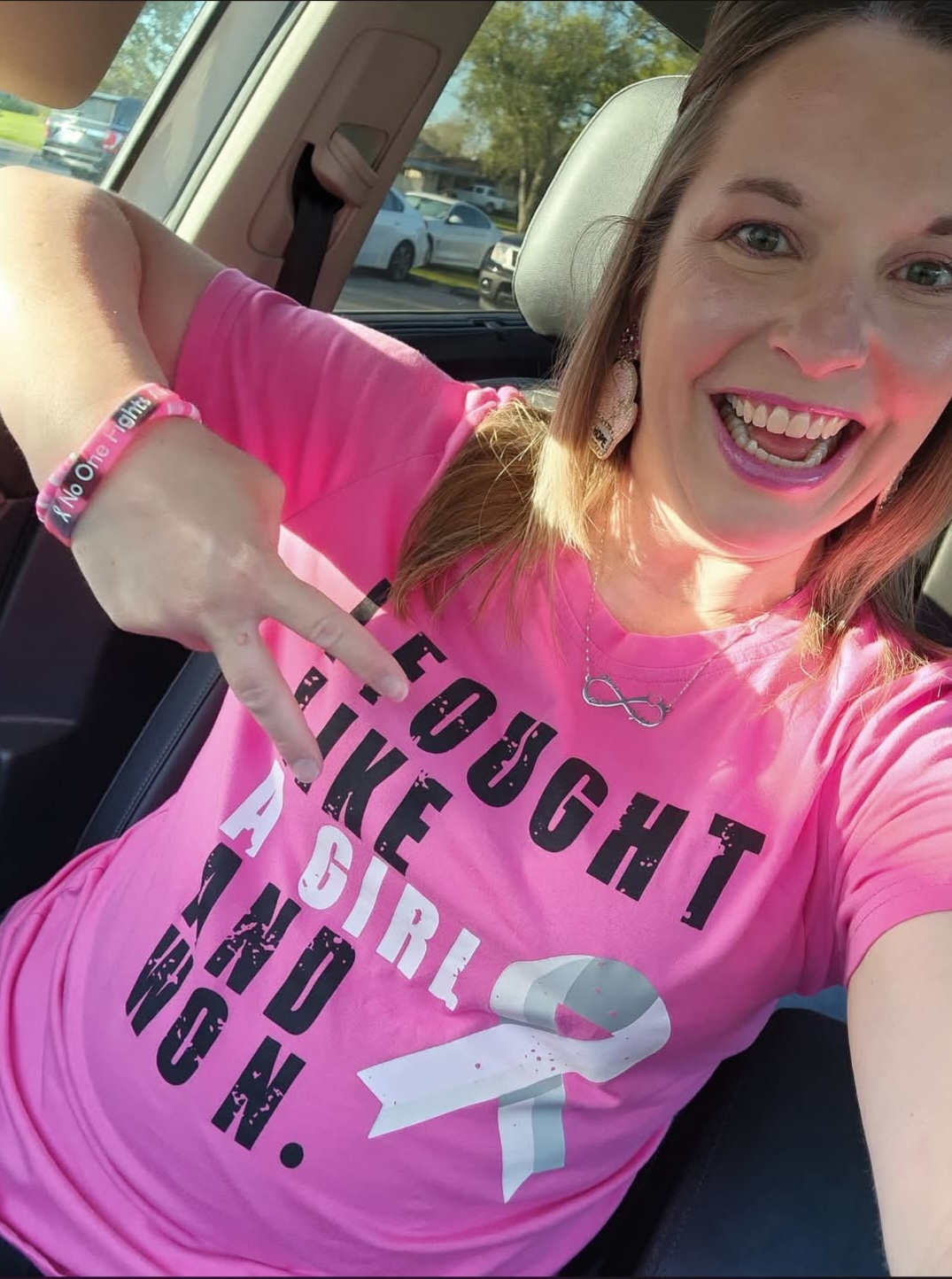
In March 2026, one year after completing her final infusion, Stacie reached an important milestone: she was considered cancer free. The experience also gave her a new platform. She has spoken publicly about breast cancer awareness at an LCMC Health benefit brunch, sharing a story that began with a mammogram she almost did not follow up on.
Stacie knows how different that story might have been if Dr. Hutchinson had not urged her to return for additional testing.
Mammograms can identify abnormalities before a person can feel a lump or notice other symptoms. When a screening mammogram identifies a suspicious area, additional imaging or a biopsy may be needed to determine whether it is cancer. The Women's Imaging and Breast Care Center at West Jefferson Medical Center provides screening and diagnostic mammography, breast ultrasound and image-guided breast biopsy services.
For Stacie, medicine was only one part of getting through treatment. Her husband, children, extended family, friends, and coworkers provided another. Soon after her diagnosis, family and friends organized a benefit in her honor. The turnout showed her just how many people were prepared to stand beside her.
“The support that was there, the community really showed me they were there for me,” she said. “That helped me get through it all.”
Her children and Corey gave her a reason to keep pushing through the difficult days.
“The biggest thing that kept me going is my children, my husband and family,” Stacie said. “I have an amazing village. I am surrounded by amazing people, especially my friends at work. They are like family to me.”
Today, Stacie is back to the things that matter most to her: her family, her work, camping, shopping and watching her children play sports.
Her experience also left her with a simple lesson about breast screening. Not feeling a lump, having no symptoms, and having no family history did not mean there was nothing to find. For Stacie, following up on an abnormal mammogram led to a diagnosis and a multidisciplinary treatment journey that included medical oncology, breast surgery, reconstructive surgery, infusion care and ongoing follow-up.
It also reinforced a message she now shares with other women: Don’t put off recommended follow-up care.
For more information about West Jefferson Medical Center’s Women’s Imaging and Breast care center, please visit: West Jefferson Medical Center’s Women’s Imaging and Breast Care Center