Breakthrough Therapy Offers New Hope for Pancreatic Cancer Patients at University Medical Center New Orleans
- Category: Cancel Cancer
- Posted On:

Bridget Dorris was experiencing some vague digestive symptoms, nothing that seemed that bad, when doctors came back with the diagnosis no one wants to hear: pancreatic cancer.
Dorris was diagnosed with stage III pancreatic cancer, and she knew all about its grim reputation as one of the disease’s most aggressive, feared, and lethal forms.
She took the news stoically.
“Emotionally, it’s a tough hit,” she said. “You just live day by day. That's all you can do.”
Dorris has lived day by day for nearly five years now, dealing with delays caused by Hurricane Ida, the ups and downs of treatment, the disease becoming metastatic. Earlier this year, she had exhausted the standard treatment options available for pancreatic cancer.
But renewed hope came in the form of an experimental drug procured for her by doctors at LSU LCMC Health Cancer Center. The center is one of a handful of academic medical hospitals around the country where the targeted oral therapy, known as daraxonrasib, was then available outside of clinical trials.
"It couldn't have become available for her at a more perfect time," said Brian Boulmay, MD, her oncologist at LSU LCMC Health Cancer Center within University Medical Center and professor of Clinical Medicine at LSU Health New Orleans, who moved quickly to help Dorris begin the therapy.
The Long Road of Care
Dorris, 74, a Navy veteran, began her medical treatment at the New Orleans VA, which is staffed by University Medical Center/Louisiana State University physicians, including Dr. Boulmay, who has overseen her care throughout her cancer journey. Surgery was scheduled as soon as Hurricane Ida disruptions eased.
The surgery is known as the Whipple procedure, one of the most complex abdominal operations performed. Surgeons remove part of the pancreas along with portions of the stomach, small intestine, and bile duct, then reconnect the remaining organs so digestion can continue.
It was a major undertaking, but she recovered steadily, helped along by her children, who stayed close throughout.
“They took really good care of me,” she said.
Chemotherapy followed. Under Dr. Boulmay's care, she completed six months of treatment, then enjoyed a nine-month break before her cancer markers began rising again.
A second regimen was started — this one lasting nearly two years. The infusions were difficult at times, but they kept the cancer under control.
“Watching that poison go through your veins wasn’t fun,” she said, “but it worked okay for years.”
Throughout her treatment, Dr. Boulmay and the care team closely monitored Dorris’ tumor markers, imaging and response to therapy, adjusting her treatment plan as the disease changed.
A New Targeted Therapy Emerges
By early 2026, the pattern shifted. Her CA-19-9 tumor marker climbed, and scans showed new growth in her liver. She had already received all standard chemotherapies used for pancreatic cancer.
“She really was at the limits of what we had available,” said Dr. Boulmay.
That’s when the call came about daraxonrasib.
Daraxonrasib is a type of targeted therapy known as a RAS inhibitor. It targets a protein that drives tumor growth and acts like an “off switch” for the cancer’s signaling pathways. By blocking that protein, tumors can shrink back and periods of disease control become possible.
For pancreatic cancer, that kind of response is rare. At this year’s American Society of Clinical Oncology meeting in Chicago, oncologists applauded the presentation of phase III trial results – a rare event at scientific conferences.
“It’s really a home run,” Dr. Boulmay said. “A six-month survival improvement in pancreatic cancer is something you don’t see very often.”
Bridging the Gap
The drug was made available to Dorris through the Food and Drug Administration's compassionate use program, a pathway that allows patients with life-threatening conditions to receive promising therapies before full approval. At the time, the LSU LCMC Health Cancer Center was among a limited number of academic centers nationwide authorized to provide daraxonrasib outside of clinical trials, and University Medical Center had the largest number of patients receiving the therapy in the region.
For Dorris, the timing aligned almost exactly with her need for a new option.
Still, doctors are careful to frame the drug as a lifeline rather than a solution, buying time until another therapy comes along.
“It’s not a cure,” Dr. Boulmay said. “But it’s a bridge. And in pancreatic cancer, that bridge can make all the difference.”
Dorris started the medication in June — two pills taken once a day, 24 hours apart.The side effects were minimal, just a small rash. Within a month, her CA-19-9 dropped by about 50 percent, an early sign that she may be responding to treatment.
“Her tolerance has been really good,” said Dr. Boulmay. “Early indications are that she seems to be responding well.”
Holding on to Hope
Dorris says she feels well.
“I wouldn’t know I was sick if not for the diagnosis,” she said.
She continues her regular appointments, driven by her children, and she stays active. Her mood is good. Her outlook is optimistic.
“When you’re looking down that barrel of alternatives, you can’t help but feel optimistic,” she said.
She is especially grateful that access to an emerging therapy did not require her to leave New Orleans. “I’m blessed to be right here where you can get it,” she said.
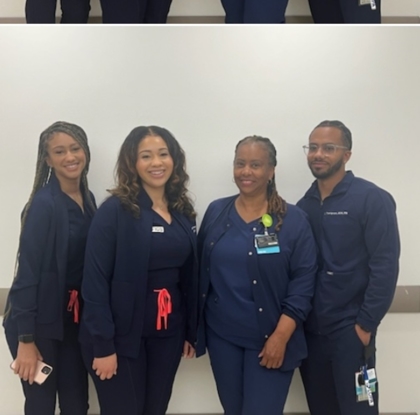
For Dorris, that access — and the doctors, nurses, and other members of her University Medical Center care team who have guided her through nearly five years of treatment — has helped her continue moving forward.
In late August, the FDA approved daraxonrasib (brand name Rasonque), allowing patients across the country with the most common type of advanced pancreatic cancer to access it without the barriers of an extended access program. The treatment that arrived just in time for Dorris is now part of the standard arsenal, offering new hope to people facing one of the toughest diagnoses in medicine.
Dorris continues to take matters day by day, just as she has from the start. For now, she is doing well. And for now, that is enough.
For more information about the LSU LCMC Health Cancer Center and the Cancer Center at University Medical Center, visit Cancer Center Services - UMC New Orleans - LCMC Health