The exact cause of benign prostate enlargement, also known as benign prostatic
hyperplasia (BPH), is not fully understood. However, several factors are
believed to contribute to the development of BPH. These factors include:
Age
Hormonal changes
Family history
Hormone dihydrotestosterone
Chronic inflammation
Lifestyle factors
If you are experiencing symptoms suggestive of BPH, such as difficulty
urinating, frequent urination, or a weak urine stream, it's important
to consult with a healthcare professional for an accurate diagnosis and
appropriate management. Treatment options can be tailored based on the
severity of symptoms and their impact on the individual's quality of life.
If you are suffering from benign prostate enlargement and are looking for
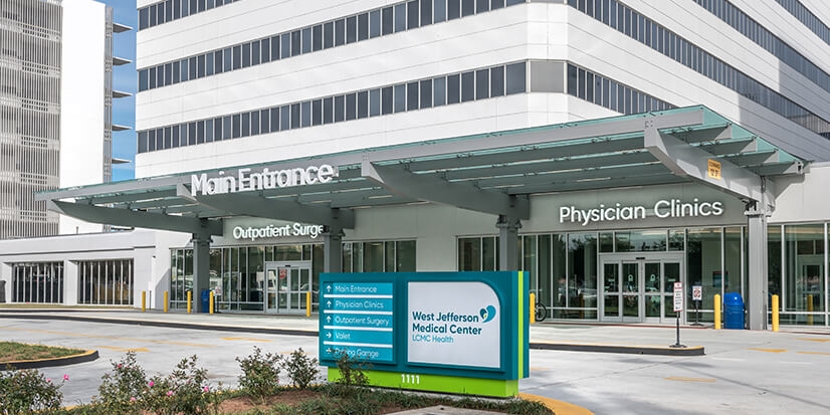
the right treatment option, our urology team at West Jefferson Medical
Center is here to support you.
Over half of men over 60 have symptoms of enlarged prostate
Benign prostatic hyperplasia (BPH), also known as enlarged prostate, is a common condition that affects many
men, particularly as they age. Common symptoms include:
Frequent urination
Weak or interrupted urine flow
Urgent need to urinate
Difficulty emptying bladder completely
Waking up at night to urinate
Straining to void
UroLift is a less-invasive treatment option
While traditional surgeries and medications are options for treating BPH,
they aren’t right for everybody. The UroLift provides an alternative.
The UroLift system is a medical implant designed to relieve the symptoms
of BPH by pulling back the tissue surrounding the urethra. While the device
is inserted by a surgeon, it is a less-invasive procedure with no incisions,
cutting, or removal of tissue.
The best part of the UroLift system is that results are immediate, making
it a great option for those who want symptom relief as soon as possible.
How do I know if I have BPH?
By taking the International Prostate Symptom Score (IPSS), you and your
urologist can better understand the severity of your BPH symptoms. Take our
BPH Quiz to determine your score and a treatment plan best for you!
We’re here to help.
If you are dealing with the symptoms of BPH, you don’t have to ‘just
deal with it’. The team at West Jefferson Urology is here to help.
We’ll work with you to create a treatment plan that fits your unique
needs. If you are looking to discontinue or avoid BPH medication, UroLift
may be a great option for you.
Laser surgery can help treat moderate to severe BPH symptoms.
Benign prostatic hyperplasia (BPH), also known as enlarged prostate, occurs when the prostate gland becomes
larger over time and begins obstructing the flow of urine from the bladder.
Common symptoms include:
Frequent urination
Weak or interrupted urine flow
Urgent need to urinate
Difficulty emptying bladder completely
Waking up at night to urinate
Straining to void
For some men, a surgery known as
laser vaporization of the prostate can help.
What is prostate laser surgery?
During the procedure, a surgeon will insert a scope through the penis into
the urethra (the tube that carries urine from the bladder). Because the
prostate surrounds the urethra, when it becomes enlarged it causes restricted
urine flow.
Once the scope is in place, a laser is passed through. The laser is used
to vaporize or “melt away” excess prostate tissue, freeing
up the urethra to carry urine more smoothly.
Laser surgery can be a great option for some BPH patients. Versus other
types of BPH surgery, laser vaporization of the prostate offers:
TURP stands for Transurethral Resection of the Prostate. It is a surgical
procedure commonly used to treat benign prostatic hyperplasia (BPH), which
is the non-cancerous enlargement of the prostate gland. TURP is considered
a standard and effective surgical intervention for relieving the symptoms
associated with BPH. TURP is effective in reducing symptoms associated
with BPH, such as difficulty starting urination, weak urine stream, frequent
urination, and incomplete bladder emptying. It is particularly suitable
for men with moderate to severe symptoms.
TURP can help treat moderate to severe BPH symptoms.
Benign prostatic hyperplasia (BPH), also known as enlarged prostate, is a common condition that affects many
men, particularly as they age. Common symptoms include:
Frequent urination
Weak or interrupted urine flow
Urgent need to urinate
Difficulty emptying bladder completely
Waking up at night to urinate
Straining to void
What is TURP?
During the procedure, the surgeon inserts a special instrument called a
resectoscope through the urethra. The resectoscope is equipped with a
light, a camera, and a wire loop that can remove or vaporize prostate tissue.
The surgeon then uses the resectoscope to remove or vaporize small pieces
of the enlarged prostate. This helps to create a wider channel through
the center of the prostate, relieving the obstruction of the urethra and
improving urine flow.
We’re proud to offer treatment options for BPH.
While TURP is a well-established and successful procedure, the decision
to undergo TURP is based on factors such as the severity of symptoms,
the impact on quality of life, and the individual's overall health. The
team at West Jefferson Urology will work with you to create a personalized
treatment plan based on your unique needs. Call us to schedule an appointment
at 504.934.8100 or
select a doctor to schedule online.
Suprapubic prostatectomy is a surgical procedure used to remove part or
all of the prostate gland, often to treat conditions such as benign prostatic
hyperplasia (BPH) or prostate cancer.
Over half of men over 60 have symptoms of enlarged prostate.
Benign prostatic hyperplasia (BPH), also known as enlarged prostate, is a common condition that affects many
men, particularly as they age. Common symptoms include:
Frequent urination
Weak or interrupted urine flow
Urgent need to urinate
Difficulty emptying bladder completely
Waking up at night to urinate
Straining to void
What is Suprapubic prostatectomy?
In this procedure, an incision is made in the lower abdomen, just above
the pubic bone (suprapubic region), to access the prostate gland. The
surgeon removes a portion of the prostate (partial prostatectomy) or the
entire prostate (radical prostatectomy) depending on the underlying condition.
This approach allows for direct access to the prostate from above, avoiding
the need to go through the urethra.
We’re here to help you.
Suprapubic prostatectomy is less common than other prostate surgeries like
transurethral resection of the prostate (TURP) or robotic-assisted laparoscopic
prostatectomy but may be recommended in certain cases. It's important
to note that the specific type of prostatectomy performed depends on factors
such as the patient's overall health, the size of the prostate, the presence
of cancer, and the surgeon's judgment.
If you are dealing with the symptoms of BPH, you don’t have to ‘just
deal with it’. The team at West Jefferson Urology is here to help.
We’ll work with you to create a treatment plan that fits your unique
needs. Call us to schedule an appointment at 504.934.8100 or
select a doctor to schedule online.








.jpg)