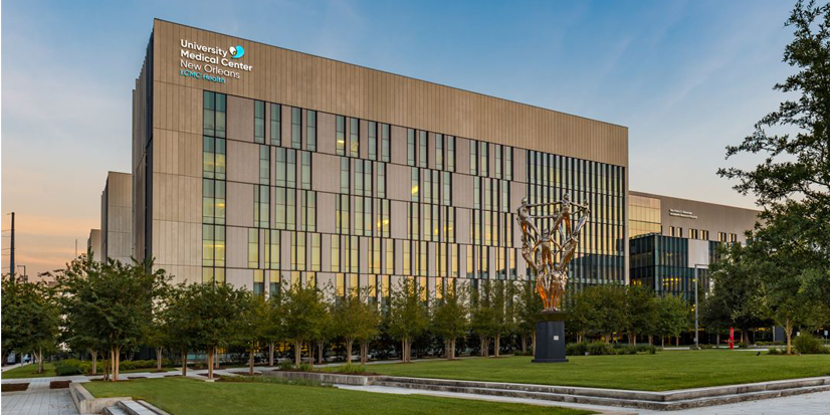
Advancing cancer research through high-quality biospecimens, clinical annotation,
and community-centered science
.2607131006315.png)
The LSU LCMC Health Cancer Center Biobank is a centralized, ethically governed
biospecimen and clinical-data resource designed to accelerate cancer research
across Louisiana and the Gulf South. The Biobank supports basic, translational,
clinical, precision-oncology, cancer health-disparities, investigator-initiated,
industry-sponsored, and NCI-sponsored research.
Through collaboration among LSU Health New Orleans, LCMC Health, University
Medical Center New Orleans, Touro, East Jefferson General Hospital, the
Louisiana Cancer Research Center, and the Louisiana Tumor Registry, the
Biobank provides investigators with access to high-quality cancer-related
biospecimens and linked de-identified clinical data under standardized
operating procedures, IRB oversight, and multidisciplinary governance.
Message from the Director
Cancer research depends on the generosity of patients, the commitment of
clinicians, and the ability of scientists to study high-quality biospecimens
linked to meaningful clinical data. The LSU LCMC Health Cancer Center
Biobank was created to bring these elements together in a centralized,
standardized, and ethically governed resource for our Cancer Center.
Our mission is to help transform the cancer experience for patients in
Louisiana and beyond by supporting research that improves cancer prevention,
diagnosis, treatment, survivorship, and precision medicine. Louisiana’s
diverse patient population gives us a unique responsibility and opportunity
to advance discoveries that reflect the communities we serve, including
populations historically underrepresented in cancer research.
The Biobank is more than a specimen repository. It is a research infrastructure
platform that connects patients, clinicians, scientists, pathologists,
data systems, and regulatory oversight. By collecting and preserving tissue,
blood, and other biospecimens with rigorous quality control and clinical
annotation, we aim to support high-impact studies, clinical trials, biomarker
discovery, multi-omic research, and cancer health-disparities research.
We are grateful to the patients who voluntarily contribute specimens, to
the clinical teams who support collection workflows, and to the investigators
who use these resources to ask important questions. Our goal is to build
a nationally recognized biobank that supports the LSU LCMC Health Cancer
Center’s growth, research mission, and path toward NCI designation.
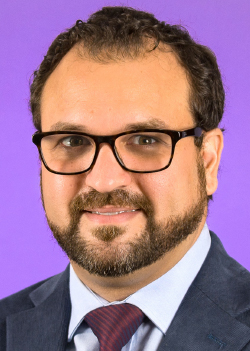
Omeed Moaven, MD
Director, LSU LCMC Health Cancer Center Biobank
Surgical Oncology, LSU Health New Orleans
Biobank leadership
Omeed Moaven, MD
Director, LSU LCMC Health Cancer Center Biobank
Surgical Oncology, LSU Health New Orleans
Zhiyan Fu, MD
Histopathology
Celeste Daigneault
Operational Manager
Biobank team
The Biobank team supports patient screening, informed consent, biospecimen
collection, processing, annotation, inventory management, quality control,
and release of approved specimens for research.
Current team members include:
- Celeste Daigneault
- Adriana Zapata
- Srabani Kar
- Imani John-Baptiste
Additional research associates support screening, consent, collection,
processing, and clinical annotation across participating LCMC Health sites.
Information
What the Biobank collects
The Biobank collects cancer-related biospecimens and associated de-identified
clinical data for approved research. Specimen types may include:
- Tissue specimensL Tumor tissue, adjacent non-tumor tissue, lymph nodes,
procedure-derived tissue, FFPE tissue, OCT-embedded tissue, snap-frozen
tissue, and viable-cell-ready aliquots when appropriate.
- Biofluid specimens: Whole blood, serum, plasma, cfDNA/Streck blood, platelet-free
plasma, buffy coat, PBMC preparations, urine, saliva, buccal swabs, bone
marrow, and other protocol-specific specimens.
- Clinical annotation: Demographic, clinicopathologic, treatment, tumor registry,
and outcome-related data are linked to specimens when available and approved
for research use according to IRB approval of each study.
By turning to LCMC Health, you aren’t limited to currently available
therapies. We proudly participate in clinical trials. As a result, you
have access to new therapies that offer great promise.
The Biobank’s processing, banking, and distribution operations are
centralized at the Biospecimen Core Laboratory at the Louisiana Cancer
Research Center, located at 1700 Tulane Avenue in New Orleans.
Collection sites include:
- University Medical Center
- Touro
- East Jefferson General Hospital
Planned and anticipated expansion includes additional LCMC Health sites
including East Jefferson General Hospital and Manning Family Children's.
The Biobank supports the full spectrum of cancer research, including:
- Precision oncology
- Biomarker discovery
- Cancer health-disparities research
- Genomics, pharmacogenomics, proteomics, and multi-omic studies
- Organoid, PDX, and translational model development
- NCI-sponsored research and clinical trials
- Industry and investigator-initiated studies
- Studies focused on early detection, treatment response, resistance, survivorship,
and outcomes
By linking high-quality biospecimens to de-identified clinical information,
the Biobank enables investigators to ask deeper and more clinically relevant
questions about cancer biology, treatment response, and disparities in
cancer outcomes.
All Biobank activities are conducted under IRB-approved protocols, standardized
operating procedures, and multidisciplinary oversight. Patient participation
is voluntary and does not affect clinical care.
The Biobank uses standardized workflows for screening, consent, specimen
collection, transport, pathology review, processing, storage, annotation,
retrieval, and release. Tissue specimens undergo pathology quality control
when appropriate, including assessment of tumor content and necrosis.
Biospecimens are stored using validated preservation methods, including
vapor-phase liquid nitrogen, -80°C freezer storage, snap freezing,
FFPE preparation, OCT embedding, and viable-cell-ready aliquoting when
indicated.
All specimens and data are pseudonymized. Investigators receive only approved
de-identified information unless a specific IRB-approved protocol permits
otherwise. Data security, chain-of-custody documentation, access control,
and specimen tracking are maintained through dedicated biobank informatics
infrastructure.
The Biobank uses BTM-Research™, a dedicated biobank automation platform
that supports specimen accessioning, barcode labeling, inventory management,
dynamic storage mapping, pre-analytical variable capture, chain-of-custody
documentation, IRB tracking, sample search and request functions, and
cost tracking.
Clinical annotation is strengthened through linkage with the Louisiana
Tumor Registry, allowing biospecimens to be paired with structured cancer
diagnosis, treatment, and outcome data. Future interface development with
the electronic medical record is planned to further enhance clinical-data
capture and research readiness.
Since launch, the Biobank has established a centralized cancer biospecimen
infrastructure for the LSU LCMC Health Cancer Center and has made substantial
progress in operations, governance, informatics, clinical-trial support,
and institutional research support.
Selected accomplishments include:
- Established the LSU LCMC Health Cancer Center Biobank as a centralized
Cancer Center shared resource and the Biorepository Core of the Cancer Center.
- Launched independent Biobank operations in 2024.
- Centralized processing and cryopreservation at the Louisiana Cancer Research Center.
- Integrated prior and related biorepository efforts into a harmonized Cancer
Center resource.
- Implemented standardized operating procedures for consent, collection,
processing, pathology review, annotation, storage, retrieval, and specimen release.
- Established a multidisciplinary Oversight and Prioritization Committee
to review and prioritize biospecimen requests.
- Implemented BTM-Research™ biobank automation for specimen tracking,
inventory management, chain-of-custody documentation, and study workflows.
- Established linkage with the Louisiana Tumor Registry to support clinically
annotated biospecimen research.
- Supported investigator-initiated, institutional, external, and NCI-sponsored
research studies.
- Supported multiple NIH biospecimen and clinical trial studies
- Expanded collection activity across LCMC Health sites, including University
Medical Center New Orleans, Touro, and East Jefferson General Hospital.
As of 10/1/2026 Current Biobank Activity Includes:
- Total consented donors: 1803
- Total blood collections: 1455
- Total tissue collections: 315
- Active internal industry and national research projects:15
Additional historical and transition activity includes integration of prior
UMC/Touro donor files and specimens and support of national and institutional
biospecimen studies.
The LSU LCMC Health Cancer Center Biobank is supported by partnerships
across the cancer research and clinical-care ecosystem, including:
- LSU Health New Orleans
- LCMC Health
- University Medical Center
- Touro
- East Jefferson General Hospita
- Louisiana Cancer Research Center
- Louisiana Tumor Registry
- DSI-BTM
- NIH/NCI-sponsored biobanking initiatives
- Institutional and external cancer investigators
Investigators interested in accessing Biobank specimens or data should
follow the established request pathway:
- Obtain or provide an IRB-approved protocol
- Submit a brief protocol summary, including specimen and data needs, to
Biobank leadership.
- The Biobank performs a feasibility review, including specimen availability,
collection logistics, processing needs, staffing, clinical annotation,
and preservation method.
- A cost estimate is prepared based on the approved fee schedule.
- The request is reviewed by the Biobank Oversight and Prioritization Committee.
- Approved studies proceed to collection, retrieval, release, invoicing,
and, when required, execution of a Material Transfer Agreement.
- Automated online request capability is available through iLab.
Investigators may also contact Biobank leadership directly.
Get involved
For more information about the LSU LCMC Health Cancer Center Biobank, biospecimen
availability, research collaboration, or specimen-request procedures,
please contact:.
Omeed Moaven, MD
Director, LSU LCMC Health Cancer Center Biobank
omoave@lsuhsc.edu
504-210-1845
Celeste Daigneault
Operational Manager
cdaig6@lsuhsc.edu