Stroke Care
Helping New Orleans stroke patients on the path to recovery
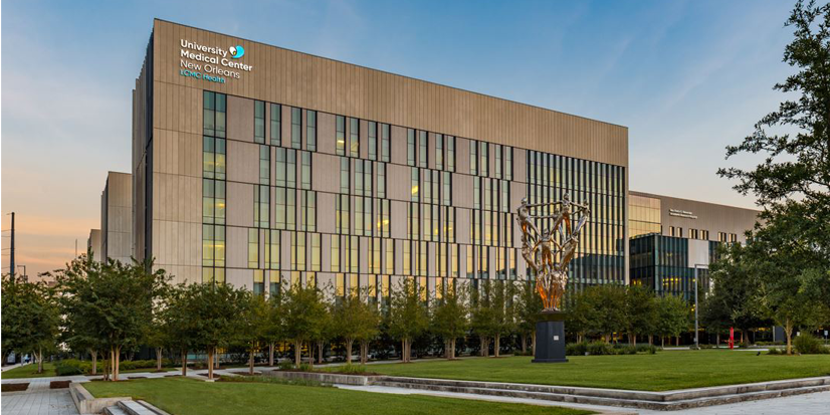
At University Medical Center New Orleans, our Advanced Primary Stroke Center is available 24/7 to ensure each patient gets the care they need, when they need it. Strokes are among the nation’s most dangerous health concerns, affecting over 795,000 people each year and rendering many severely disabled. With the right care delivered within a proper time frame, University Medical Center helps patients to minimize the debilitating effects of stroke and helps people get back to their lives.
What is a stroke?
Stroke is caused by a lack of oxygenated blood making it into the brain. This can be caused by blood clotting in the brain which deprives it of oxygen or by a burst blood vessel. In either case, care is needed immediately if the victim is to survive without permanent damage.
You can recognize a stroke by remembering to check for:
- B- Balance: Sudden loss of balance or coordination
- E- Eyes: Sudden, persistent blurred or double vision, or other vision trouble
- F- Face: Sudden numbness or weakness in the face or an uneven smile
- A- Arm: Sudden numbness or weakness in arm or leg, usually on one side of the body
- S- Speech: Sudden difficulty speaking
- T- Time: If these symptoms occur suddenly, or are accompanied by sudden, severe dizziness or the worst headache of your life, call 911
Recognized for exceptional care
Our rigorous standards of excellence have been nationally recognized. Since 2010, the Advanced Primary Stroke Center at University Medical Center New Orleans has been designated as a Nationally-Certified Primary Stroke Center by The Joint Commission. University Medical Center has also received the American Heart Association/American Stroke Association’s Get With The Guidelines® Target: Stroke Gold Plus quality achievement award, which recognizes the hospital’s commitment to ensuring stroke patients receive the most appropriate treatment according to nationally recognized, research-based guidelines based on the latest scientific evidence.
Stroke program features
Our stroke center gives patients access to the potentially lifesaving care they need right away. We use the latest effective tools and medicine to ensure patients get the best care possible.
Our stroke unit helps patients by providing:
- Dedicated 25 beds for stroke victims
- Multidisciplinary stroke team that includes neurologists, nurses, radiologists, case managers, dietitians, pharmacists, therapists (physical, respiratory, occupational and speech), and an interventional neuroradiologist
- The clot-busting stroke drug TNK, administered to over 91.5% of our patients in less than 60 minutes, exceeding The Joint Commission’s requirement
- Door-to-emergency department physician, neurology services, TNK administration, and CT scan completion all within or under national time standards
- Community education that helps fight the prevalence of strokes
- Comprehensive follow-up in stroke care
- Stroke survival numbers are continually improving.
Support group offerings
Our Different Strokes support group meets together with survivors of stroke and their loved ones to share their stories and support one another. For more information on this support group, call 504.702.5019.
2025 carotid procedure outcome data
- UMC's 30-day stroke and death rate for patients following symptomatic CEA, CAS, TCAR for Q1 + Q2 2025 is 4.5% (1 out of 22 cases, goal <6%).
- UMC's 30-day stroke and death rate for patients following asymptomatic CEA, CAS, TCAR for Q1 + Q2 2025 is 0% (0 out of 8 cases; goal <3%).
2024 stroke outcome data
- Mean number of minutes from time of arrival at UMC to start of treatment with clot busting medication: 33 minutes
- Percentage of patients without significant bleeding in the brain following treatment with clot busting medication: 98.2%
- Median number of minutes from time of arrival at UMC to start of treatment with thrombectomy: 103 minutes
- Median number of minutes from the time of arrival at UMC to the time excellent restoration of blood flow is achieved: 127 minutes
- Percentage of patients without significant bleeding in the brain following a thrombectomy procedure: 98.5%
- Percentage of all stroke patients discharged to home or rehab: 74.7%
- Percentage of patients discharged to home or rehab following a thrombectomy procedure: 67%