Our team can help you restore comfort and improve quality of life through
advanced therapies and minimally invasive surgeries.
What is benign prostatic hyperplasia or BPH?
Benign prostatic hyperplasia (BPH) is when the prostate gland becomes larger
over time and begins obstructing the flow of urine from the bladder. You
may also hear this condition referred to as enlarged prostate.
BPH can lead to the following symptoms:
Leaking or dribbling of urine
Difficulty starting urine stream
More frequent urination, especially at night
Urgency
An interrupted, weak stream of urine
Loss of urine control
Kidney damage
Blood in urine
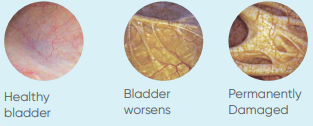
Bladder damage
Urinary tract infections
Bladder stones
Inability to empty bladder/urinary retention
If you have an enlarged prostate, rest assured that it is a normal, common
part of aging. BPH is not cancer and does not develop into prostate cancer.
What causes BPH?
Experts don’t know for sure what causes BPH. Throughout a lifetime,
the prostate (a walnut-sized gland that controls semen production) goes
through two periods of growth. The first growth period occurs during puberty,
when the prostate doubles in size. Around age 25, many men experience
the second growth period. From that point on, the prostate can continue
to grow for most of a man’s life.
Most men do not begin experiencing symptoms of BPH until their 50’s,
however symptoms of BPH may present as early as in their 20’s.
How do I know if I have BPH?
By taking the International Prostate Symptom Score (IPSS), you and your
urologist can better understand the severity of your BPH symptoms. Take
our quiz below to determine your score and a treatment plan best for you!
Surgical and non-surgical treatments are available
The West Jefferson Medical Center Urology Team is here to help you treat
and manage BPH. From herbal or prescription medication to the latest in
surgical innovations, we’ll work with you to find solutions that
fit your unique case and life.
What are treatments for BHP?
There are different treatment options for BPH, like non-surgical treatments,
minimally invasive therapies, or surgeries.
Non-surgical treatments:
Lifestyle changes
Medications like alpha blockers, 5HT reductase inhibitors, or anticholinergics/antimuscarinics
Minimally invasive therapy treatments:
Urolift: This is a medical implant designed to relieve the symptoms of BPH by
pulling back the tissue surrounding the urethra. While the device is inserted
by a surgeon, it is a less-invasive procedure with no incisions, cutting,
or removal of tissue.
Prostate laser surgery: During the procedure, a surgeon will insert a scope through the penis
into the urethra (the tube that carries urine from the bladder). Because
the prostate surrounds the urethra, when it becomes enlarged it causes
restricted urine flow.
Transurethral resection of the prostate (TURP): During this procedure,
a resectoscope is inserted through the tip of your penis and into the
tube that carries urine from your bladder (urethra). The resectoscope
helps your doctor see and trim away excess prostate tissue that's blocking
urine flow.
Robotic suprapubic prostatectomy: During this procedure, the obstructing
prostate tissue is removed while leaving the prostate capsule preserved.
This does not have an impact on urinary continence or erectile dysfunction.









.jpg)