Katrina Babies: The Incredible Story of Twins Born During the Hurricane
- Category: Women's Health, EJGH Womens Health
- Posted On:
- Written By: Ted Lewis

Outside East Jefferson General Hospital on the day after Hurricane Katrina struck, it was chaos. But inside the labor and delivery unit, Hilary Duggan found herself oddly at peace - as if the world had somehow slowed down.
That was despite knowing she had twin girls, Betty and Mary-Margaret, on their way, two months before Hilary’s due date. No matter that she’d been on bed rest for almost her entire pregnancy, including spending the last month on a contraction-slowing drip in a windowless hospital room. This was it.
“I was pretty calm,” Hilary recalled. “I just knew everything was going to be OK.”
Maybe it was because, as Dr. Vincent Culotta, head of the hospital’s OB/GYN department who would deliver the twins had reassured her, “Babies are going to come, hurricane or not.
“But everyone in this hospital has an understanding that we just have to do what needs to be done. Everybody’s pitching in.”
Two decades later, Betty and Mary-Margaret Duggan are living proof that Culotta was spot on.
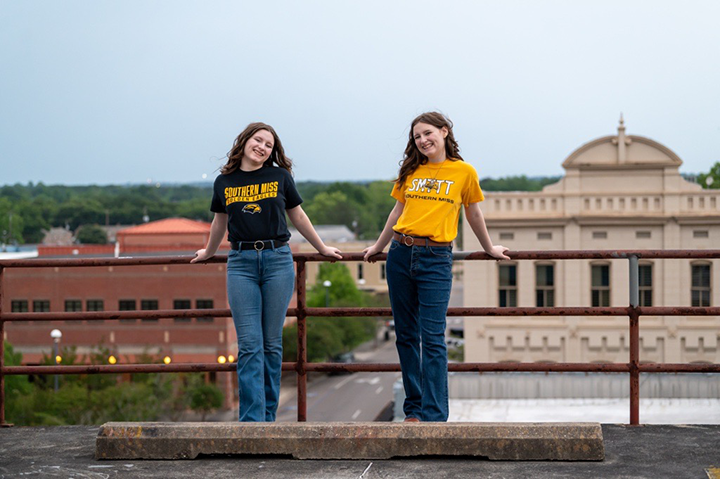
As they approach their 20th birthdays on Aug. 30, the sisters are juniors at the University of Southern Mississippi in Hattiesburg, the city where they’ve lived since shortly before their first birthdays when their father, Jack, joined his alma mater’s sports information department, which he now heads.
“I’ve always thought of them as our miracle babies because it was beginning to look like Hil couldn’t get pregnant,” Jack Duggan said. “But then for them to be born healthy, for Hil to be OK, that was all I was thinking about then.
“We’ve been very blessed.”
While the twins have heard their origin story many times - how they were delivered via C-section after Hilary’s water broke, how the decision was made to transport the twins plus 11 others in the neonatal unit (the Duggans were the only twins) via ambulance to Women’s Hospital in Baton Rouge in the predawn hours of Aug. 31, how Hilary was discharged late that afternoon, how she and Jack drove to Baton Rouge where they were able to hold their babies for the first time and how the twins were released that weekend, all going to Hilary mother’s home in Thibodaux because the Duggan’s house in Lakeview was uninhabitable, it wasn’t until recently that along with their parents Betty and Mary-Margaret returned to EJGH for the first time since they were born.
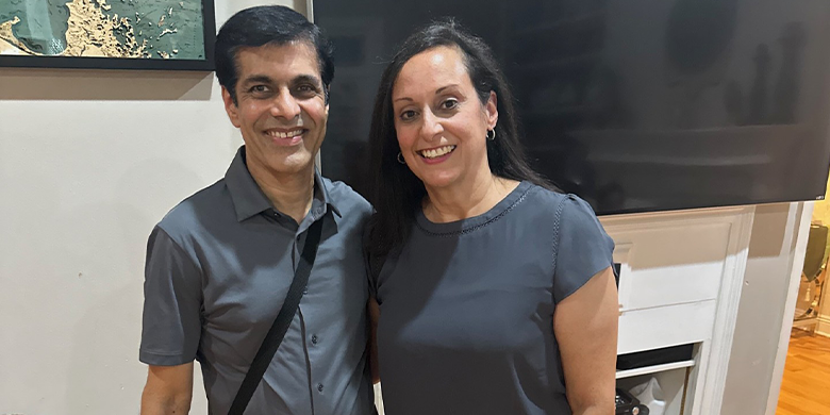
That’s when it hit home how just much effort was made to bring them and the other Katrina babies into the world.
“We’re very grateful,” said Mary-Margaret, by one minute the younger of the two. “All of the doctors and nurses and ambulance drivers and everyone else were working to keep us alive while they had to be worried about their families and their homes.
“I just want to hug all of them.”
To Shane Landreaux, then and now a neonatal nurse practitioner at EJGH who assisted in the twins’ delivery, it was just another day at the delivery room, albeit with a greatly heightened urgency.
“It definitely was a crazy time,” said Landreaux, whose own wife, Shannon, was just three weeks away from her due date. “But we knew we could handle it.
“We had plenty of emergency generator power and there was enough staff to handle things. The thing I remember most about the twins was that Hilary was remarkably calm though the whole thing. That really helped.”
To be sure, conditions at East Jefferson were nowhere near as harrowing as at most of the other major medical centers in Orleans and Jefferson parishes.
Water did seep into the ground floor of EJGH, but the nearby canal on Esplanade Blvd. held so there was no disastrous flooding on that side of the levee.
Still, since staff members were allowed to bring their families to the hospital, and even their dogs and cats, an estimated 3,000 people were packed in the facility, there was a lot of make-do going on.
“With all the water around us, we were a little island,” said Barbara Carson, then a nurse in the labor and delivery unit and now the unit’s manager. “But we were able to get deliveries in and out which made a big difference.”
“We kept hearing about how the other hospitals were having a terrible time of it.”
That included Tulane, where Hilary would have been had not her regular OB/GYN transferred to EJGH a few months before. So Hilary wound up at East Jefferson with Jack spending every night with her on a pull-out recliner that, when she saw one, struck Mary-Margaret as being more uncomfortable than her mother’s situation.
The plan was for Hilary to remain at EJGH until the twins’ October due date. But when Katrina arrived on Aug. 29 and devastated the area, Jack arranged through his brother, a physician in Meridian, Mississippi, for a helicopter to evacuate them to Birmingham, Alabama, on the 30th.
“I was kind of excited about a helicopter ride,” Hilary said. “But then my water broke and that was that.”
There’s a theory that the falling barometric pressure during a hurricane accelerates the labor process, but Culotta adds that most twins are born prematurely in any case. And with Hilary carrying babies that weighed 4 pounds, 13-ounces and 5-1 respectively inside an amniotic sac, the time had come.
“Hilary was huge,” Culotta said. “It wasn’t going to be much longer.”
The actual delivery was routine, but because of respiratory concerns, the parents were able to hold their daughters only briefly before they were placed in a ventilator.
“I was amazed how easy it seemed,” Hilary said. “It was like ‘Boom! Boom!’ and they were.”
Culotta, who was not Hilary’s regular OB/Gyn, did have some bad news later on - telling her and Jack that their home was probably lost.
But the priority was to get the neonatal babies out of EJ because there would be more mothers arriving in the coming days as soon as the surrounding debris had been moved to clear the roads out of Metairie.
“We did our best to keep all of the moms calm,” said Culotta, now president of the state board of medical examiners. “We were dealing with a situation none of us had experienced before, at least not this severe.
“But the staff did a wonderful job of reassuring the parents we were going to take care of them and their babies.”
Indeed, transportation to Baton Rouge was arranged with a nurse riding in each of the ambulances which left the hospital about 4:30 a.m.
Just before, Hilary and Jack were allowed to see, but not hold the babies.
That afternoon, Hilary was able to leave the hospital, although the drive to Baton Rouge was understandably rough for a woman less than 24 hours removed from a C-section. She only had some gowns and a pillow sham from the hospital since the rest of her belongings were in their flooded home.
“I wasn’t thinking much about that,” Hilary said. “I was just so fortunate to have such wonderful doctors and nurses.”
As it turned out, that was the last time that the Duggan family had any contact with the staff at EJGH.
They first stayed in Thibodaux, then Meridian, then back to Thibodaux when UNO reopened in January because there was no housing available in New Orleans and finally to Hattiesburg when Jack was hired at USM.
That made their return to EJGH, which included a guided tour of the labor and delivery area, all the more meaningful.
“I wouldn’t recommend having babies in a hurricane,” Hilary said. “But we have healthy, beautiful daughters and a good life in Hattiesburg.
“So many things could have gone wrong. God was looking over us.”