TCAR Procedure at East Jefferson Helps Stroke Survivor Reclaim Her Life
- Category: Heart & Vascular, Heart Care
- Posted On:

When Sandra Moss, 72, of Metairie, Louisiana, completed her final physical and occupational therapy session earlier this year, her care team at East Jefferson General Hospital had some encouraging news: she was an ideal candidate for TransCarotid Artery Revascularization (TCAR)—a minimally invasive procedure designed to reduce the risk of stroke in patients with carotid artery disease.
“I experienced a stroke shortly after undergoing double bypass surgery and discovered that I had a ‘widow maker’ blockage,” said Sandra. “Thankfully, the stroke wasn’t debilitating, but it was a clear sign to my doctors that more intervention was necessary.”
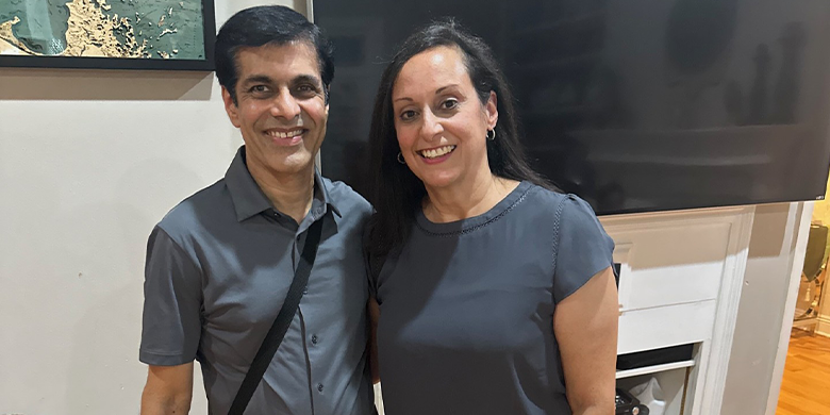
In April 2025, Sandra had TCAR surgery at East Jefferson. Gary Menszer, MD, an interventional cardiologist, performed the surgery. Harry Roach, MD, thoracic and cardiac surgeon, assisted with the procedure. Thoracic and Cardiac Surgery (
Sandra was Dr. Menszer’s 100th TCAR patient.
So, what exactly is TCAR—and why is it becoming the preferred option for certain patients?
Understanding TCAR and Its Benefits
TCAR is an innovative, less invasive treatment that helps reduce the risk of stroke in patients with significant carotid artery blockages. The procedure involves a small incision at the base of the neck to access the carotid artery. A specialized device temporarily reverses blood flow away from the brain, minimizing the risk of dislodging plaque that could cause a stroke. Once stabilized, a stent is placed to open the artery and restore healthy circulation.
“TCAR has been gaining traction as a safer alternative for patients who may not be ideal candidates for open surgery,” explained Dr. Menszer. “Compared to traditional carotid endarterectomy, it involves a smaller incision, a lower risk of stroke during the procedure, and a faster recovery time. That’s why TCAR is often a better option for high-risk patients—especially older adults or those with heart or lung conditions who may not tolerate open surgery as well.”
“The TCAR procedure wasn’t bad at all,” Sandra recalls. “I was only in the intensive care unit overnight as a precaution and then was able to go home.” The TCAR procedure marked the final step in Sandra's somewhat frightening journey. Throughout most of her life, she has battled hypercholesterolemia, a condition where a person’s low-density lipoprotein, or bad cholesterol, is excessively high. She had managed her health without suffering a heart attack or stroke, but that changed last Labor Day when she experienced a sudden, sharp pain on her left side that caught her attention.
After witnessing her husband suffer a heart attack, she was convinced she was having one or was close to it. Aware that time was of the essence, she quickly sought medical care. An angiogram revealed that she had severe left main and left anterior descending (LAD) artery disease. Her LAD had a critical blockage—commonly referred to as a 'widow maker” blockage. This necessitated a double bypass in October.
Life After TCAR: Recovery, Rehabilitation, and Moving Forward
Now that Sandra’s heart surgery and TCAR procedure are over, she is participating in a 12-week Cardiac Rehabilitation program at East Jefferson, which she will complete in July. This program consists of regular workouts on the treadmill, stationary bike, and lifting weights. Sandra also makes it a point to walk 40 minutes every day.
Since the TCAR surgery, Sandra said she’s feeling well and has been able to return to the life she loves: playing cards, going to church, spending time with her granddaughter, and getting together with friends.
Grateful for the care she received, Sandra credits the medical team at East Jefferson with guiding her through every step of the procedure and recovery. “Everyone, including Dr. Menzer, has been fantastic. They provided reassurance every step of the way and helped me understand what to expect,” said Sandra.
As far as a long-term prognosis is concerned, Sandra is taking it day by day, but believes that by taking her medication, exercising, and eating right, she will be able to live a healthy life.
“It’s wonderful that we have access to modern procedures and expert healthcare at East Jefferson,” said Sandra. “My experience renewed my strength, gave me hope, and a second chance at a full and active life.”
For more information about Heart and Vascular Care services at East Jefferson, visit Heart and Vascular Care | East Jefferson General Hospital.