Stroke Care
Experienced stroke care in Covington
Our hospital is certified as an Advanced Primary Stroke Center by The Joint Commission in collaboration with the American Heart Association/American Stroke Association, demonstrating adherence to evidence‑based stroke care standards.” “Our hospital was the first hospital on the Northshore to be certified in 2014.” Our most recent certification was in 2024, our next certification is in April 2026.
Lakeview Hospital offers a full range of services for the acute treatment of a stroke. Our professional stroke care team works to identify rapidly and stabilize the area of the brain being damaged. We will then work with you to overcome the effects of a stroke and to reduce the chance of subsequent occurrences.
A stroke occurs when the flow of oxygen-rich blood is blocked from reaching a portion of the brain. Without oxygen, those brain cells start to die in a few minutes. When that happens, symptoms occur in different areas of the body that those brain cells control. A stroke, or “brain attack,” can be a life-threatening injury if not quickly diagnosed.
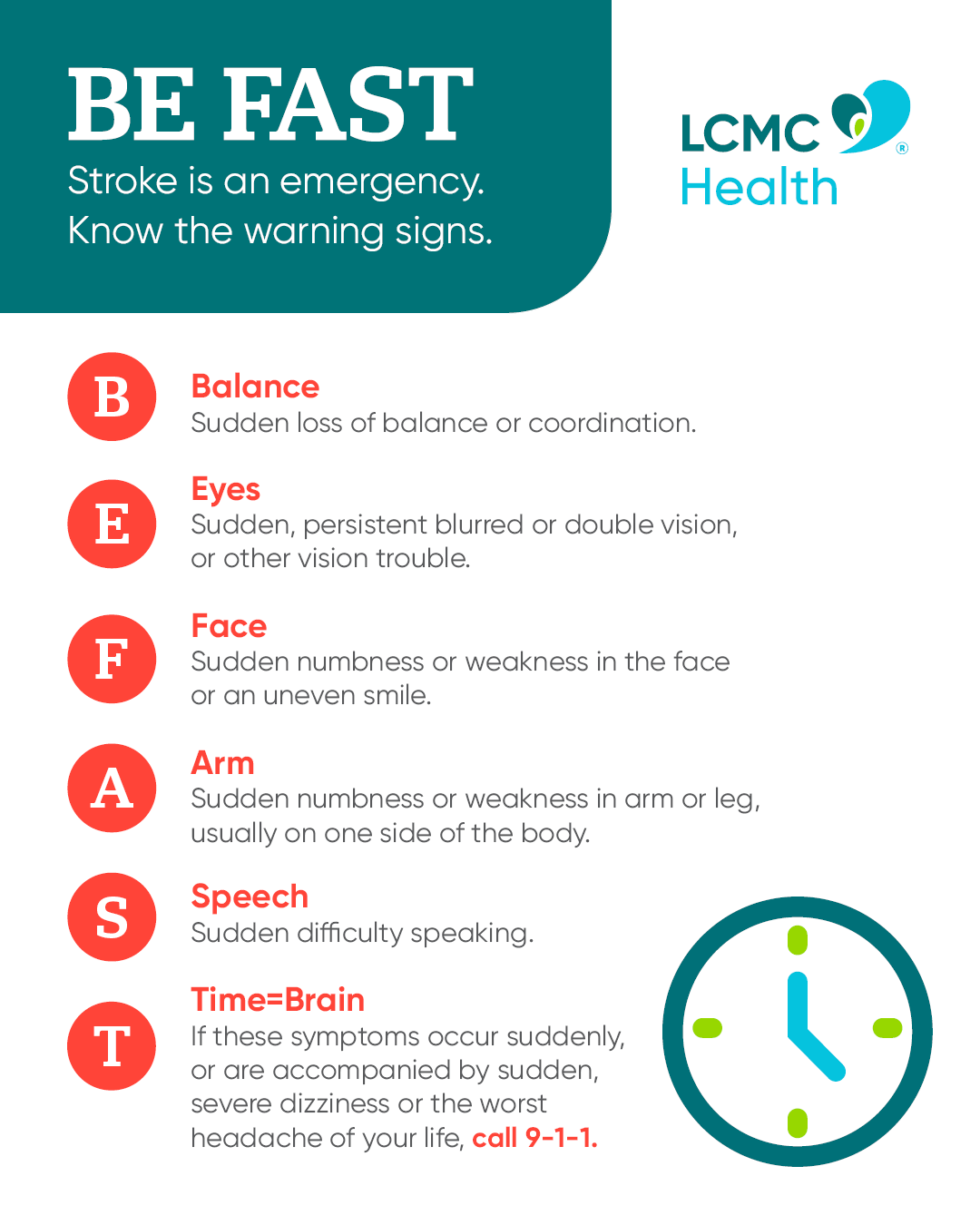
Some of the most common symptoms of a stroke include:
- Sudden weakness in all or part of your body
- Paralysis or numbness in the face, arms, or legs
- Trouble speaking or understanding speech
- Trouble with walking or balance
- Vision problems in one or both eyes
- Sudden, severe headache that is different from headaches you have had in the past
These symptoms do not necessarily mean you are having a stroke. However, if one or more of these symptoms comes upon you suddenly, call 911 or come to the Emergency Room as soon as possible.
Certain risk factors may increase your chances of having a stroke. Some of these risk factors include:
- High blood pressure
- High cholesterol
- Smoking
- Being overweight or obese
- Diabetes
- Sleep apnea
- Cardiovascular disease
- Excessive or binge alcohol use
- Illicit drug use
- Family history of stroke or heart attack
How is a stroke diagnosed?
Early diagnosis and intervention are crucial to minimizing the effects of a stroke. If you believe you are having or have had a stroke, we will perform a series of tests to diagnose the extent of the problem in order to recommend the best treatment options. These tests may include:
- Neurological exams: Our expert physicians will listen to you and observe your symptoms, checking for reflexes, assessing your ability to answer questions, and noting your ability to move and perform basic motor skills.
- Blood tests: Our laboratory is available 24/7, so we have results quickly to proceed with your treatment.
- Computed Tomography (CT) Scan: This can show whether or not there is bleeding in the brain.
- MRI Scan: This test can give more detail than the CT scan, showing other areas that may need attention as a result of the impaired blood flow.
- Additional tests may be performed, depending on your unique systems, including Angiography, Magnetic Resonance Angiography (MRA), a Functional MRI, or Doppler Ultrasound.
Services and treatments
Once you’ve been diagnosed with a stroke, your treatment options depend on the severity of your condition. Our team of physicians and experts will determine the best course for you individually, taking into account the extent of damage caused by the stroke and your potential for a reoccurrence. In some cases, medications may be prescribed. In other cases, surgical procedures to remove the blockage or place a stent may be needed.
Our Rehabilitation Department offers stroke patients the necessary treatment they need for recovery, including physical therapy, occupational therapy, and speech therapy.
Why Lakeview Hospital is the best choice for stroke care
Our hospital was the first hospital on the Northshore certified by the American Heart Association as a Primary Stroke Center. We offer 24/7 neurology and neurosurgery services.
The Stroke Program at Lakeview Hospital provides 24-hour emergency care for acute stroke diagnoses and consultative care and treatment for patients at high risk for stroke and those with underlying vascular pathologies. It is our mission to provide the best possible chance of survival and reduction of disability after acute stroke.
As a Certified Advanced Primary Stroke Center, we aim to provide a high standard of care for our patients. Our team provides coordinated care from the EMS providers throughout the hospital stay to discharge planning.
With 24/7 service from our registered nurses, you can talk to a nurse directly about your situation to determine if you need to be seen by a physician.
Advanced primary Stroke Center
2025 Stroke Performance Scorecard
Lakeview Hospital Advanced Primary Stroke Center demonstrates strong performance across Joint Commission Stroke core measures and Get With The Guidelines®–Stroke (GWTG‑Stroke) metrics, reflecting timely, evidence‑based, and patient‑centered stroke care.
Joint Commission Stroke Measures & GWTG‑Stroke Metrics (2025)
- Median Door‑to‑Needle (DTN) Time for IV Thrombolysis: 38 minutes
- Antithrombotic Therapy by Hospital Day 2: 100%
- Anticoagulation for Atrial Fibrillation at Discharge: 100%
- Statin Therapy at Discharge: 98.6%
- Stroke Education Completion: 100%
- Rehabilitation Services Assessment: 100%
These results reflect consistent adherence to nationally recognized clinical guidelines and performance benchmarks for acute ischemic stroke care.
EMS and Regional Stroke System Integration
Lakeview Hospital Advanced Primary Stroke Program is committed to seamless integration with EMS partners and regional stroke systems to ensure rapid identification, treatment, and appropriate transfer of stroke patients.
Key initiatives include:
- EMS pre‑notification collaboration to expedite stroke team activation and imaging readiness
- Established transfer protocols with Comprehensive and Thrombectomy‑Capable Stroke Centers to support advanced interventions when indicated
- Active participation in regional stroke systems of care, supporting coordinated, high‑quality stroke management across the continuum