From Nurse to Patient and Back: Touro Nurse Returns to Caring for Patients After Traumatic Brain Injury
- Category: Rehabilitation, Patient Story, University Medical Center New Orleans, Touro
- Posted on:

A longtime nurse, Katherine Elkins found her home when she moved to New Orleans and started working at Touro’s Ambulatory Surgery Center. Just two weeks before her one-year anniversary at Touro, part of LCMC Health, Katherine went from caring for patients to becoming a patient herself following a traumatic accident.
In 2023, Katherine and a few friends decided to ride their bikes to see some shows during Jazz Fest. While crossing an intersection, Katherine was hit by a car. Katherine’s next memory was waking up at University Medical Center New Orleans.
“I don’t remember much from right after the accident, but I found out later that they told my sister there was a chance I wouldn’t make it through the night,” Katherine recalled.
The crash left Katherine with a long list of serious injuries: a traumatic brain injury and brain hemorrhaging, fractures in her neck and lower back, shattered shoulder blade, seven broken ribs, a collapsed lung, a liver laceration, severe nerve damage in her left arm, extensive injuries to her right leg, and more.
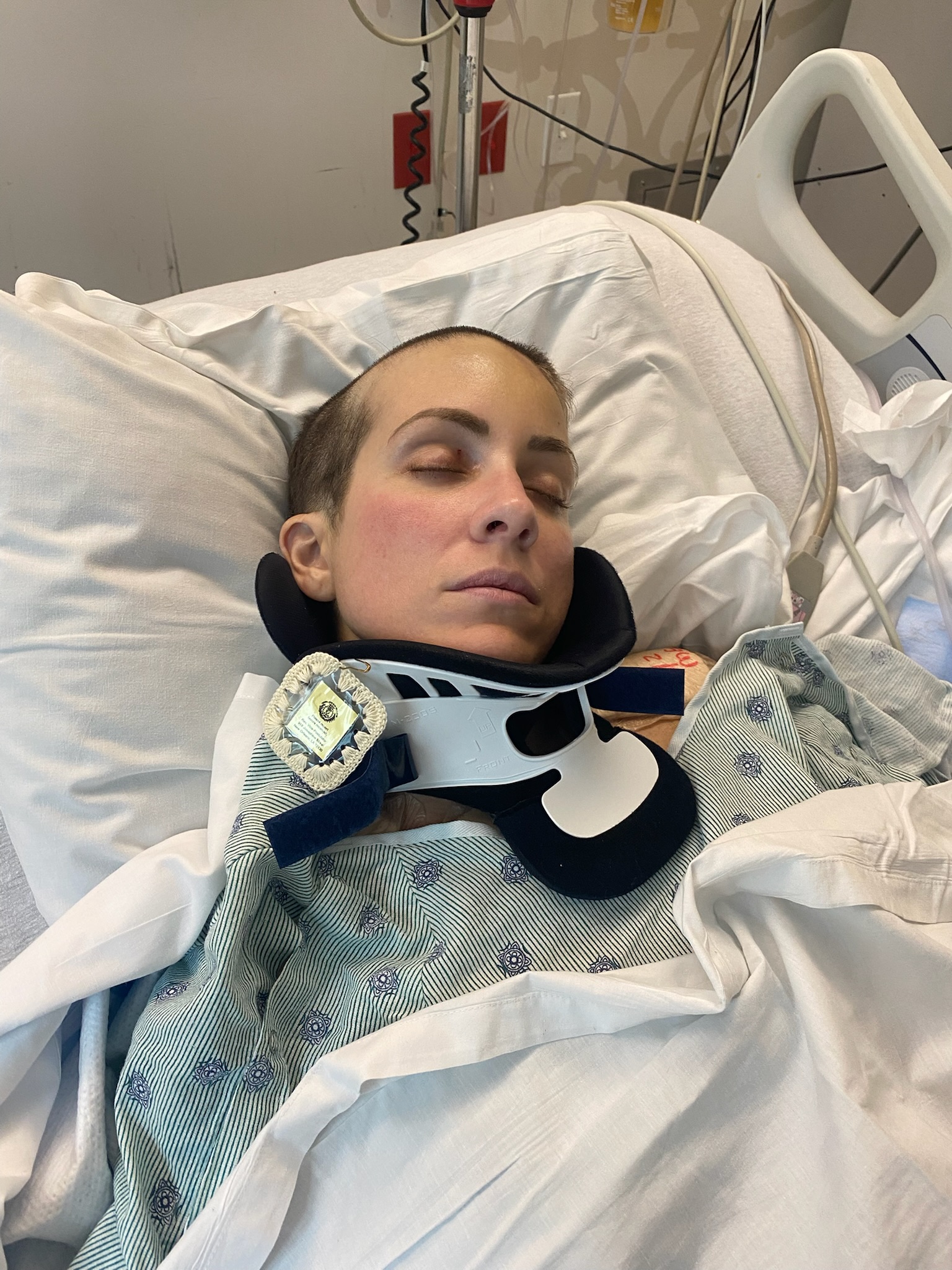
“I remember that I would get confused about where I was and what day it was,” Katherine said. “What I remember most is the people who took care of me.”
There was a new nurse who found out Katherine loved Dippin’ Dots and would bring it to her. Katherine initially thought it was a free treat from the hospital cafeteria but would later find out that the nurse had been buying it for her. There was Jesse, who learned Katherine loved the outdoors. As soon as she was well enough, Jesse would help Katherine into a wheelchair and take her to an outdoor area on campus.
“I remember touching the water in the fountain and feeling like I was seeing everything for the first time,” Katherine remembered. “I was so grateful to be alive and decided then that I wasn’t going to waste a second of life.”
Relearning Everyday Skills Through Inpatient Rehabilitation
Once Katherine was stable enough to leave acute care, she was transferred to Touro for inpatient rehabilitation.
“I had always heard that Touro had a good rehabilitation program, but I didn’t know how fantastic it was until I experienced it,” Katherine said. “The best part was I got a corner room, so I had a great view, which helped lift my spirits.”
When Katherine arrived at Touro, her left arm was still paralyzed, and she was still being treated for extensive injuries to her right leg. Recovering enough independence to return home would require intensive rehabilitation. Physical, occupational, and speech therapy became part of her daily routine as she worked to regain strength, balance, and stamina she needed to walk and function more independently.
Progress came gradually, but Katherine continued moving forward. Eventually, she reached an important milestone: she was ready to leave inpatient rehabilitation and continue her recovery at home through outpatient therapy.
“Everyone was excited for me,” Katherine said. “Any other patient would have been excited too, but I wasn’t. I didn’t want to leave the friends who had become family, and I was worried about being home alone.”
Leaving Touro did not mean Katherine’s recovery was over. Over the next several months, Katherine’s days were filled with doctor and therapy appointments and additional surgeries. Unable to work and with mounting medical bills, she relied on generous support she received from the community. An online fundraiser raised $75,000, and a raffle organized by a friend raised another $10,000.
“The brain injury made managing all of it very difficult,” Katherine recalled. “But I’m thankful for the experience because it’s made me a better patient advocate today. I can sit down with someone and say, ‘What do we need to do today? Spend 10 minutes organizing and paying bills? I can help with that.’”
Katherine also received support from the Touro Infirmary Foundation. At the time, Meredith Maxwell, MD, an LCMC Health primary care physician affiliated with Touro, chaired the foundation.
“I remember hearing the story about one of our nurses who had been hit by a car,” Dr. Maxwell recalled. “We unanimously voted to donate to Katherine from our employee crisis fund.”
With so many medical issues to manage, Katherine decided to seek out a primary care physician who could help her navigate the next phase of her recovery. Much to Dr. Maxwell’s surprise and delight, Katherine chose her, having no idea of the connection they shared.
Navigating the Visible and Invisible Effects of Recovery
“She had been through a lot, but she still had a great attitude at our first appointment,” Dr. Maxwell said. “She was upbeat, and I was impressed by how much she understood about her situation. And Katherine still had hope.”
As Katherine’s primary care physician, Dr. Maxwell helped coordinate her complex recovery, which included orthopedic, neurological, physical, and mental health needs.
Even as Katherine’s most visible injuries began to improve, the effects of her traumatic brain injury and the emotional toll of the accident continued to affect her daily life.
She continued to experience migraines, short-term memory problems, double and blurred vision, difficulty concentrating, and a tendency to become overwhelmed by complex tasks. She also began working through anxiety, post-traumatic stress disorder, and periods of depression related to everything she had experienced.
“I get anxious feelings out of nowhere sometimes,” Katherine said. “I don’t like to open mail due to how overwhelmed I used to feel with medical bills coming in. I’ll be at the store with a full cart, start to feel anxious and have to just walk out.”
“When you’re moving from one appointment and procedure to the next, as Katherine was during the early stages of her recovery, so much of the focus is on healing physically,” Dr. Maxwell explained. “As that begins to stabilize, there is often more space to process the emotional and psychological impact of everything you’ve been through.”
“It’s the invisible parts of recovery that can be so frustrating,” Katherine said. “People look at me and think I look ‘normal,’ but there’s still so much about my life that is different. Time can be fuzzy, multitasking is a challenge, and everyday tasks take much longer than they used to.”
Through the physical setbacks, cognitive challenges, and emotional recovery, Katherine held onto one goal: She wanted to be a nurse again.
Returning to Touro—and to the Work She Loves
As her healing progressed and her appointments and procedures became less frequent, Katherine told Dr. Maxwell she thought she was ready to return to work. Eager to return to the profession she loved, Katherine applied for a nursing job opportunity at Touro.
“Katherine is an amazing nurse, and she could have picked anywhere to work,” Dr. Maxwell said. “But she wanted to come back home to Touro because it’s where her family is.”
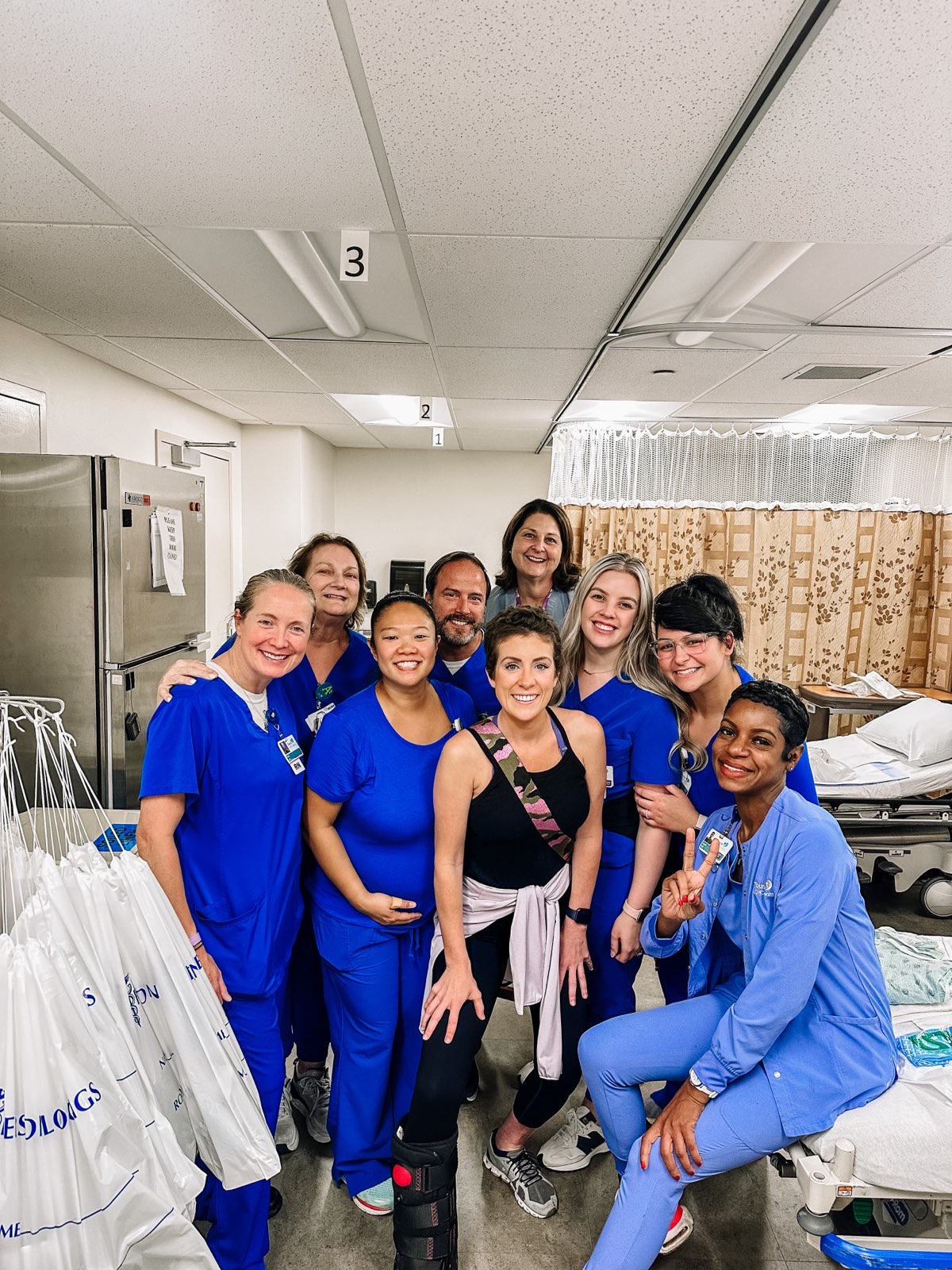
In April 2026, three years after her accident, Katherine put her Touro badge back on. Today, she cares for patients before and after their outpatient surgeries.
“Returning to work has been a crucial part of Katherine’s recovery,” Dr. Maxwell explained. “Having a regular routine and regaining a sense of independence and stability have been really positive for her. I’ve also seen her confidence grow, and she has thrived these last few months. I have no doubt that being able to return to nursing has played an important role in helping Katherine move forward in her recovery.”
Returning to nursing has required some accommodations, but Katherine said Touro has continued to support her as both an employee and a survivor of a traumatic brain injury.
“LCMC Health saved my life twice,” Katherine said. “There will never be enough thank-yous for the staff at University Medical Center and Touro for everything they did to take care of me, both after the accident and now as an employee. I need accommodations to do my job, and they’ve gone above and beyond to set me up for success.”
“The fact that she is back at work says a lot about her character and her strength,” Dr. Maxwell said. “She wants to grow. She wants to be the best nurse she can be. She loves people, and I only see good things in the future for her.”
For Katherine, returning to Touro has brought her recovery full circle—from caring for patients, to becoming one herself, to once again being able to care for others.
“I don’t know what I would have done without the opportunity to be a Touro nurse again,” Katherine said. “I love this hospital and the people I work with and care for.”
Learn more about Touro and the care available to the New Orleans community.