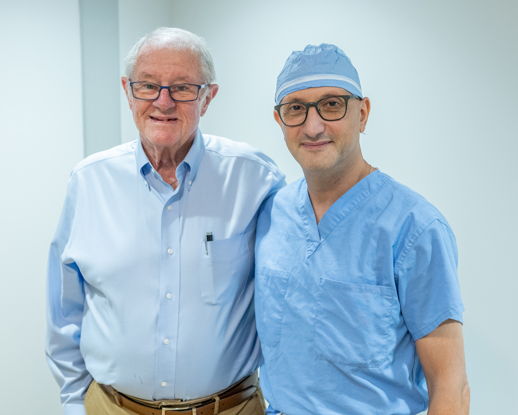
A lung cancer diagnosis can turn your world upside down. That’s why
our team of experts in thoracic and lung cancer standing by to help you
navigate through your diagnosis and treatment.
With expert medical, radiation and surgical oncologists, pulmonologists,
thoracic surgeons, oncology nurses, and pulmonary rehabilitation therapists,
you’ll have the knowledge and support of a specialized team.
Our goal is to provide world-class lung cancer care through state-of-the-art
diagnostics, individualized treatment plans, and oncology services.
Types of lung cancer we treat
Lung cancer is the leading cause of cancer-related deaths for both men
and women worldwide. Lung cancer is categorized into two types:
Non-small cell lung cancer (NSCLC): NSCLC is the most common type of lung
cancer and has three main types, which are determined by the type of cells
found in the tumor.
They include the following:
Adenocarcinoma
Large-cell carcinoma
Squamous cell carcinomas
Small cell lung cancer (SCLC): An aggressive form of cancer, most commonly
caused by smoking. SCLC is often only discovered after it has spread extensively.
Symptoms of lung cancer
Diagnosing lung cancer requires screening by a medical professional; however,
these are the most common symptoms:
A cough that doesn't go away and gets worse over time
Constant chest pain
Coughing up blood
Frequent lung infections, such as bronchitis or pneumonia
Hoarseness
Shortness of breath or wheezing
Lung cancer treatment
Depending on the type and stage of your lung cancer, your oncologist may
recommend various treatment options including radiation therapy and chemotherapy.
We also offer pulmonary rehabilitation as part of recovery.
Our support team and programs
Our cancer support program is designed to assist you with the resources
needed to manage and overcome challenges throughout your treatment journey.
Nurse navigators
Our Lung Nodule Program and Oncology Nurse navigators offer clinical expertise,
guidance and support to improve the patients' care experience, assist
physicians and achieve quality outcomes. The Lung Nodule Navigator assists
patients when a lung nodule is detected during a diagnostic scan by coordinating
appointments for further evaluation. If a nodule is non-cancerous, the
Lung Nodule Navigator will continue to assist the patient throughout their
care. If the patient has a confirmed cancer diagnosis, our Oncology Nurse
Navigator assists and coordinates the cancer treatment and surveillance.
Nurse navigation benefits our patients through:
Coordination of care, including office visits and appointment scheduling
Communication between all members of the healthcare team, including:
Medical oncologists
Radiation oncologists
Radiologists and pulmonologists
Thoracic surgeons
Family and caregiver support
Individualized education
Offering a consistent point of contact
Ongoing assessment of needs, including psychosocial, transportation and financial