
Liver Transplants
Liver transplants and failure
Non-surgical liver and biliary failure treatment
Before a transplant is warranted, Tulane Transplant Institute at East Jefferson
considers a full spectrum of holistic and clinical treatment for early-stage
liver dysfunction and/or failure.
- Interdisciplinary approach to hepatobiliary tumors.
- Chemoembolization and ablation of tumors.
- Trans jugular intrahepatic proto-systemic shunt (TIPS).
- Percutaneous biliary tract imaging and manipulation.
- Liver dialysis treatment for fulminant hepatic failure.
- Viral hepatitis treatment with access to clinical trials and protocols.
Advanced liver procedures
Fibro Scan liver biopsy
Fibro Scan is a non-invasive diagnostic device that measures liver scarring, damage, or fibrosis caused by several kinds of liver disease. Like a conventional liver ultrasound exam, outpatient Fibro Scan testing is quick, painless, easy, and provides a non-surgical alternative to a traditional liver biopsy. Fibro Scan works by emitting a small pulse of energy, which may feel like a slight vibration on your skin. The device calculates the speed of this energy to give an immediate measure of the stiffness of your liver which can be an important part of understanding overall liver health.
Liver tumor ablation
Radiofrequency ablation (RFA) is a minimally invasive procedure that treats liver tumors with heat. A thin probe goes through the skin directly into the liver tumor generating radio waves and heat at the tip of the probe destroying the entire affected area. The treated tumor begins to die immediately, and the changes can be seen right away on the CAT scan.
Hepatic artery chemotherapy pump
A hepatic artery pump is used to treat liver cancer, usually in combination with liver resection and or RFA. A small, surgically implanted pump and a catheter carry cancer-fighting medication from the pump to the patient’s hepatic artery directly into the liver. The pump supplies the medication to the liver on a continuous basis.
Liver surgery and transplants
Hepatobiliary tumor surgery
For patients with hepatobiliary tumors such as tumors in the liver and bile ducts, minimally invasive Hepatobiliary surgery involves removing benign and malignant tumors of the liver or pancreas but leaves surrounding tissue. It utilizes smaller incisions that help decrease pain, length of hospital stays, and recovery time. Our surgeons use laparoscopic techniques whenever possible to inspect the abdomen, remove, and destroy tumors.
Liver transplant surgery
When is a liver transplant considered?
- Other medical or surgical treatments have failed to correct life-threatening problems like cirrhosis.
- Some cancerous tumors of the liver or bile ducts like hepatocellular carcinoma do not respond to traditional treatments.
- Abnormalities in metabolism or anatomical function limit long-term health and transplant is only cure.
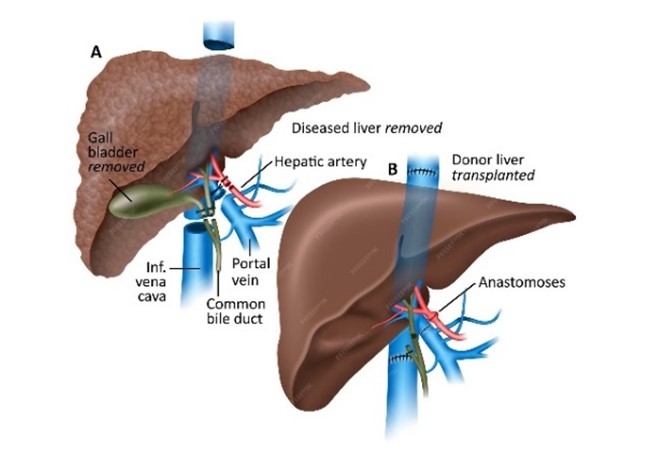
Liver transplantation involves surgically replacing the diseased liver with a new one to restore normal function and requires lifelong medications to prevent rejection.
Questions?
To learn more, please contact the Tulane Transplant Institute at 504-988-5344.