From Heart Surgery to Rehabilitation to Volunteering: Bob Rogers Gives Back to East Jefferson General Hospital, the Hospital That Gave Him a Second Chance
- Category: Heart & Vascular, Heart Care, Patient Story
- Posted On:

At 73, Bob Rogers is not someone accustomed to sitting still.
The Kenner, La., resident was born and raised in New Orleans and attended Louisiana State University where he pursued a degree in construction technology.
After a successful career, Bob retired, but he wasn’t ready to slow down. Bob loves to fish and hunt. When he isn’t doing either of those things, he can be found on any number of local school sports courts and fields where he officiates baseball, basketball, lacrosse, and flag football. In his “spare” time, he said with a laugh, he volunteers for the Special Olympics as a certified bocce official, and he serves as Scoutmaster of Boy Scout Troop 261.
Bob’s wife of nearly 40 years, Arlene, and their 33-year-old twins, are quite used to Bob being on the go. In fact, it took frightening episodes of shortness of breath, a sudden cardiac arrest, open heart surgery followed by the implantation of an Internal Defibrillator with conduction system pacing. at East Jefferson General Hospital in Metairie, La., and 36 sessions of cardiac rehabilitation to slow Bob down.
And, when he finished his own healthcare journey here, he embarked on his newest activity: volunteering at the Cardiac Rehabilitation Clinic at East Jefferson General Hospital.
A warning he could not ignore
When Bob suddenly had trouble catching his breath during a basketball game in January, he knew something was wrong. The following night, while carrying something outside, it happened again.
“I had to sit down on the tailgate of my car and catch my breath,” Bob said. “I knew I needed to go to the emergency room.”
He initially planned to go to the hospital Monday morning but had something else he wanted to take care of first. Besides, he thought to himself at the time, “I’m a healthy guy. I’m just getting older.”
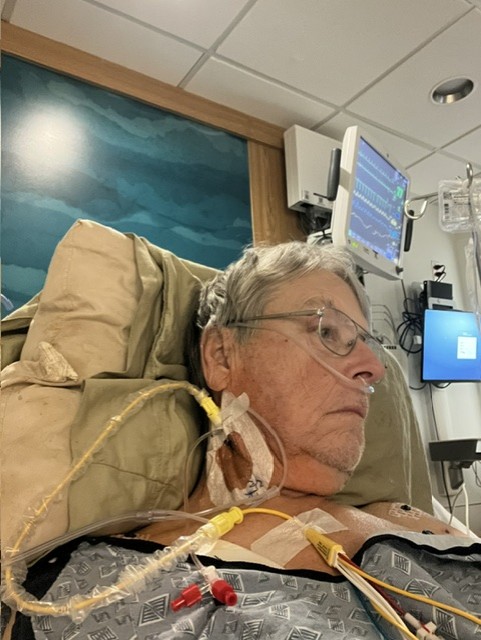
He finally went to East Jefferson General Hospital the next day on January 27. Doctors told him he had arrived not a moment too soon. He was admitted right away after the emergency team performed an electrocardiogram (EKG), a painless test that measures the heart’s electrical activity and can help doctors identify abnormal heart rhythms and signs of heart damage.
“They looked at the test results and looked at me and said ‘You won’t be going home today,’” Bob said.
A short while later Bob and his wife found out just how serious his health situation was at that moment. “My heart was working at only 15%,” he said. “They told me the normal left ventricular ejection fraction is generally around 50 to 70%.”
A severely reduced ejection fraction means the heart is not pumping enough blood to meet the body’s needs. And, Bob’s heart was functioning at a dangerously low level.
Bob had also been diagnosed with type 2 diabetes about a decade earlier. Over time, diabetes can increase the risk of cardiovascular disease, even when a person has not experienced obvious heart symptoms.
A path forward with bypass surgery
Bob had an angiogram, an imaging procedure that uses contrast dye to help doctors identify arteries that have become narrowed or blocked by plaque. Jamil Borgi, MD, a cardiothoracic surgeon at East Jefferson General Hospital and associate professor of Surgery at Tulane University School of Medicine, reviewed the results and said Bob would benefit from coronary artery bypass surgery.
“Dr. Borgi is the greatest,” Bob said. “He obviously saved my life. From the very beginning, he was advocating for bypass surgery.”
Bob’s cardiologist, Gary Menszer, MD, oversaw his medical treatment throughout the process. “Dr. Menszer came in all the time and made sure my treatment was on track,” Bob said. “He managed all the medications and made sure I was stable.”
For Bob, having physicians who took the time to explain his condition and treatment made a difference. “Both Dr. Borgi and Dr. Menszer are thorough and answered all my questions,” Bob said. “That’s exactly what I needed.”
Everything changed in seconds
Over the next few days, doctors completed final tests as Bob awaited bypass surgery.
Bob decided to let his doctors worry about his heart. He had something else on his mind. It was the night before Mardi Gras and Bob, president of the Krewe of Elks Jefferson, takes the group’s annual float competition seriously.
Very seriously.
The group had won the competition 20 of the previous 21 years. Bob asked if he could leave the hospital for one night to help finish decorating the float.
Physicians said “no” to Bob’s request, so his son took over the job. “And we won again! Our record now stands at 21 wins in 22 years,” Bob said. As excited as he was about the win, Bob acknowledges he was exactly where he needed to be that night.
That was the night he went into cardiac arrest.
East Jefferson General Hospital nurse Kri Kelly was talking with Bob at his bedside when she noticed something unusual on his cardiac monitor. His heart had gone into a life-threatening abnormal rhythm. Bob was later told his heart rate reached approximately 400 beats per minute. When he went into cardiac arrest, Kri immediately called for help and began CPR.
“There is no question about it; Kri is my angel. Her quick action is one of the many miracles I experienced while I was at East Jefferson,” Bob said. “She got me back quickly and there were people all around. I can’t thank her enough for being there and knowing exactly what to do.”
Had Bob left the hospital that night to work on the Mardi Gras float, he likely would not have survived.
Five bypasses to restore blood flow
On February 11, 2026, Bob underwent coronary artery bypass grafting. CABG is open-heart surgery used when one or more coronary arteries have become severely narrowed or blocked. Surgeons use healthy blood vessels from elsewhere in the body to create new routes around the blockages, allowing oxygen-rich blood to reach the heart muscle.
Bob received five bypass grafts. He said his doctors found severe coronary artery disease involving three major arteries, including a critical blockage in the left anterior descending coronary artery, sometimes referred to as a “widow maker” blockage. The left anterior descending coronary artery is a major vessel that supplies a large portion of the heart muscle.
“I was ready to have the surgery. I just wanted to get it done,” Bob said, happy to be on the other side of it. “Dr. Borgi said this operation was my best chance at getting back to my life.”
During the operation, the surgical team used blood vessels harvested from his chest and leg to create new pathways for blood to travel around the blocked coronary arteries.
“I believe Dr. Borgi is the best cardiac surgeon in the world,” Bob said. “I would tell everybody to come here for cardiac care.”
Overcoming challenges on the road to recovery
Bypass surgery was not the end of Bob’s hospital journey. Dr. Menszer recommended that Bob receive an implantable defibrillator with conduction system pacing to help manage his heart rhythm, improve heart function, and reduce the risk associated with another life-threatening arrhythmia. Bob underwent another procedure.

A pacemaker uses electrical impulses to help control abnormal heart rhythms. An implantable cardioverter-defibrillator, or ICD, continuously monitors the heart and can deliver electrical therapy if it detects certain potentially fatal rhythms. Some devices combine pacing and defibrillation capabilities and can also help selected patients with heart failure by coordinating the contractions of the heart’s lower chambers.
After a month-long hospital stay that included bypass surgery and the implantation of a heart device, Bob was discharged on February 27.
The month-long stay was Bob’s first major experience as a hospital patient. “The doctors at East Jefferson General Hospital are outstanding and the nursing staff is wonderful,” Bob said. “I can’t say enough good things about them.”
Strengthening his heart through cardiac rehabilitation
Bob began attending East Jefferson General Hospital’s outpatient cardiac rehabilitation program three times a week, completing 36 sessions. Cardiac rehabilitation is a medically supervised program designed for people recovering from heart attacks, heart surgery, heart failure and other cardiovascular conditions. It combines monitored exercise with education and strategies to reduce future cardiovascular risk.

Patients gradually increase their activity while trained professionals monitor factors such as heart rate, heart rhythm, blood pressure and symptoms. The goal is to rebuild strength and endurance safely while helping patients learn how to manage their heart health over the long term.
Bob embraced the program with the same competitive streak he brings to sports and Mardi Gras. After he finished cardiac rehab, he decided to get back to working out daily on his own. He believes the active life he led before his illness also helped him survive.
“Had I not been in that good of shape, I probably wouldn’t have made it to the hospital,” Bob said. “Being in relatively good shape helped me survive.”
From cardiac rehabilitation patient to volunteer
Finishing cardiac rehabilitation could have marked the end of Bob’s East Jefferson General Hospital story. Instead, he decided to come back.
In August, Bob began volunteering in the same cardiac rehabilitation program that helped him recover. He now volunteers there twice a week.
Having completed the program himself gives him an unusual connection with the patients beginning their own recoveries. “They can see how much better you are doing now to incentivize patients, and you know what you are doing,” Bob said. “I know the routine and I know what patients should and shouldn’t be doing.”
He helps new patients become familiar with the program and assists them with putting on monitoring equipment. He wipes down exercise equipment, checks supplies and helps make sure scales, water and ice machines and other parts of the rehabilitation area are ready for patients.
The work also frees the clinical staff to spend more time on patient care. “I like knowing I help to keep the nurses from having to take their valuable time to do those types of things,” he said.
For Bob, volunteering is more than something to fill his schedule. It is repayment of a debt he does not believe he can fully repay.
“I feel like the hospital gave me my life back,” Bob said. “There were miracles involved with my recovery and God wanted me to do something to give back. This is my way of thanking God for giving me Dr. Borgi and Dr. Menszer and the entire team.”
For more information on heart and vascular care services at East Jefferson General Hospital in Metairie, La., please visit: https://www.lcmchealth.org/east-jefferson-general-hospital/our-locations/east-jefferson-general-hospital-heart-and-vascul/