A lung cancer diagnosis can turn your world upside down. That’s why
our Cancer Center has a team of experts in thoracic and lung cancer standing
by to help you navigate through your diagnosis and treatment.
With expert medical, radiation and surgical oncologists, pulmonologists,
thoracic surgeons, oncology nurses, and pulmonary rehabilitation therapists,
you’ll have the knowledge and support of a specialized team.
Our goal is to provide world-class lung cancer care through state-of-the-art
diagnostics, individualized treatment plans, and oncology services.
Types of lung cancer we treat
Lung cancer is the leading cause of cancer-related deaths for both men
and women worldwide. Lung cancer is categorized into two types:
Non-small cell lung cancer (NSCLC): NSCLC is the most common type of lung
cancer and has three main types, which are determined by the type of cells
found in the tumor.
They include the following:
Adenocarcinoma
Large-cell carcinoma
Squamous cell carcinomas
Small cell lung cancer (SCLC): An aggressive form of cancer, most commonly
caused by smoking. SCLC is often only discovered after it has spread extensively.
Symptoms of lung cancer
Diagnosing lung cancer requires screening by a medical professional; however,
these are the most common symptoms:
A cough that doesn't go away and gets worse over time
Constant chest pain
Coughing up blood
Frequent lung infections, such as bronchitis or pneumonia
Hoarseness
Shortness of breath or wheezing
Lung cancer screenings
Early stage lung cancer may have few or no symptoms, which is why those
at higher risk should consider being screened for lung cancer. If you’re
over 55 years old and are a current – or former – smoker,
talk to your doctor about getting a low-dose CT
lung screening.
Robotic bronchoscopy
We offer robotic-assisted bronchoscopy, a new technology allowing for earlier
detection of lung cancer with greater accuracy. Prior to this innovative
technology, nodule location and size combined with technology limitations
made early stage diagnosis of lung cancer challenging. This minimally
invasive procedure is safer than CT-guided lung biopsy and unlike a traditional
bronchoscopy, the robotic platform gives the physician the ability to
obtain tissue samples of small and hard-to-reach nodules in the lung to
determine an accurate and timely diagnosis. The ability to diagnose these
cancers at earlier and begin treatment promises to increase chances of survival.
Lung cancer treatment
Depending on the type and stage of your lung cancer, your oncologist may
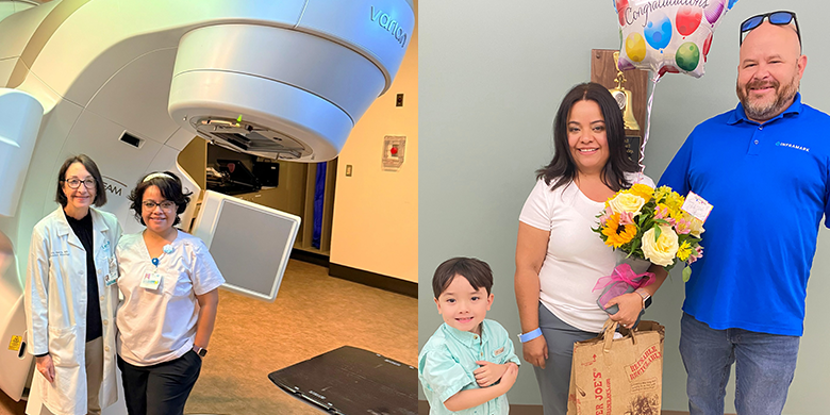
recommend various treatment options including radiation therapy and chemotherapy.
We also offer pulmonary rehabilitation as part of recovery.
Our support team and programs
Our cancer support program is designed to assist you with the resources
needed to manage and overcome challenges throughout your treatment journey.
Nurse navigators
Our Lung Nodule Program and Oncology Nurse navigators offer clinical expertise,
guidance and support to improve the patients' care experience, assist
physicians and achieve quality outcomes. The Lung Nodule Navigator assists
patients when a lung nodule is detected during a diagnostic scan by coordinating
appointments for further evaluation. If a nodule is non-cancerous, the
Lung Nodule Navigator will continue to assist the patient throughout their
care. If the patient has a confirmed cancer diagnosis, our Oncology Nurse
Navigator assists and coordinates the cancer treatment and surveillance.
Nurse navigation benefits our patients through:
Coordination of care, including office visits and appointment scheduling
Communication between all members of the healthcare team, including:
Medical oncologists
Radiation oncologists
Radiologists and pulmonologists
Thoracic surgeons
Family and caregiver support
Individualized education
Offering a consistent point of contact
Ongoing assessment of needs, including psychosocial, transportation and financial
Lung nodule program
Our lung nodule program provides prompt diagnosis and expedited care, with
the goal of detecting lung nodules earlier, diagnosing lung cancer at
an earlier stage and, ultimately, saving lives.
We are utilizing innovative technologies to detect suspicious lung nodules
by analyzing CT exams for the presence of incidental lung nodules. If
an incidental lung nodule is found, the nurse navigator contacts our physicians
to discuss the patient's follow-up. The nurse navigator also coordinates
the plan of care, provides clinical assistance and supports the patient
and their family.